Advancing Protected Agriculture Through Modern Greenhouse Technology
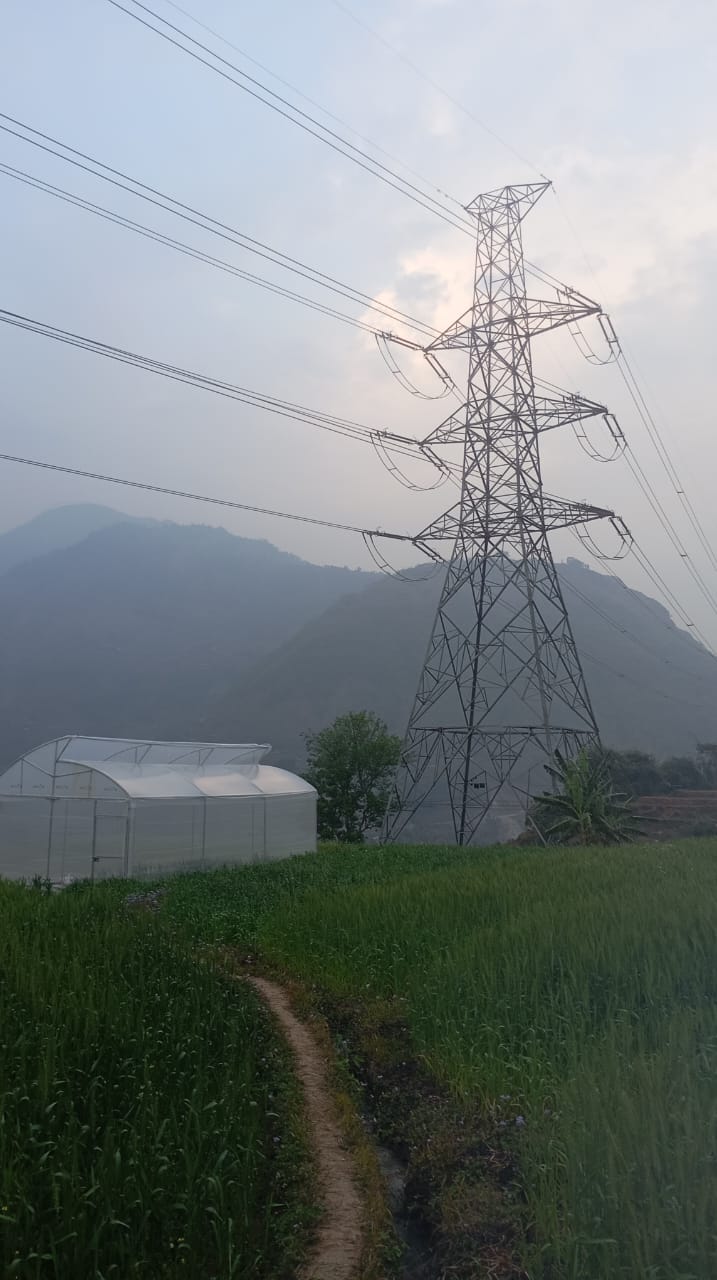
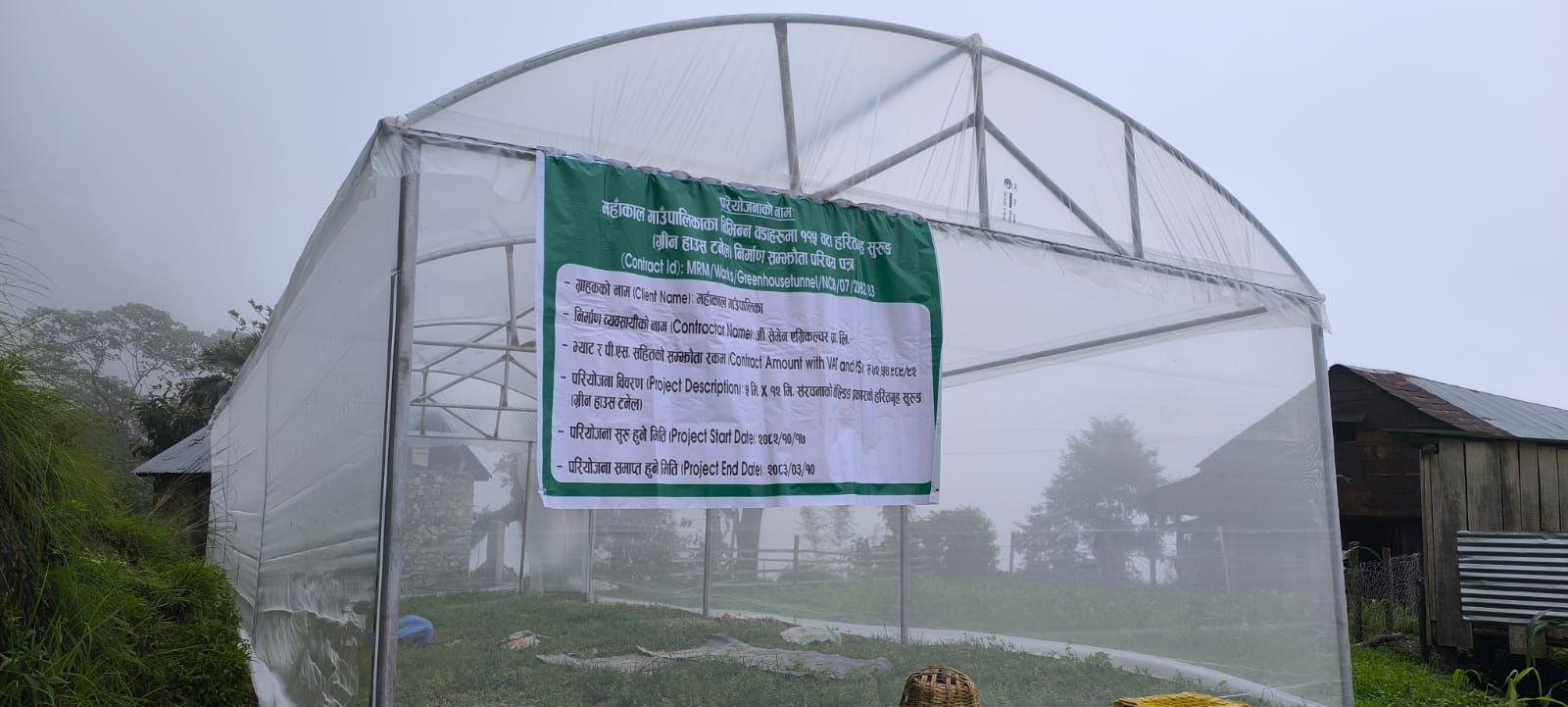
Agriculture in Nepal is increasingly adopting protected cultivation technologies to improve production conditions, enhance crop protection, and support more efficient farming practices. In line with this transition, the Bihadi Rural Municipality, Parbat initiated a large-scale protected agriculture project for the installation of 183 Top-Vent Semi Greenhouses.
The project was awarded to the Joint Venture of G Seven Agriculture Pvt. Ltd. and Bagh Bhairav Construction Pvt. Ltd., bringing together agricultural engineering and construction expertise for the development of modern greenhouse infrastructure in the municipality.
Project Overview
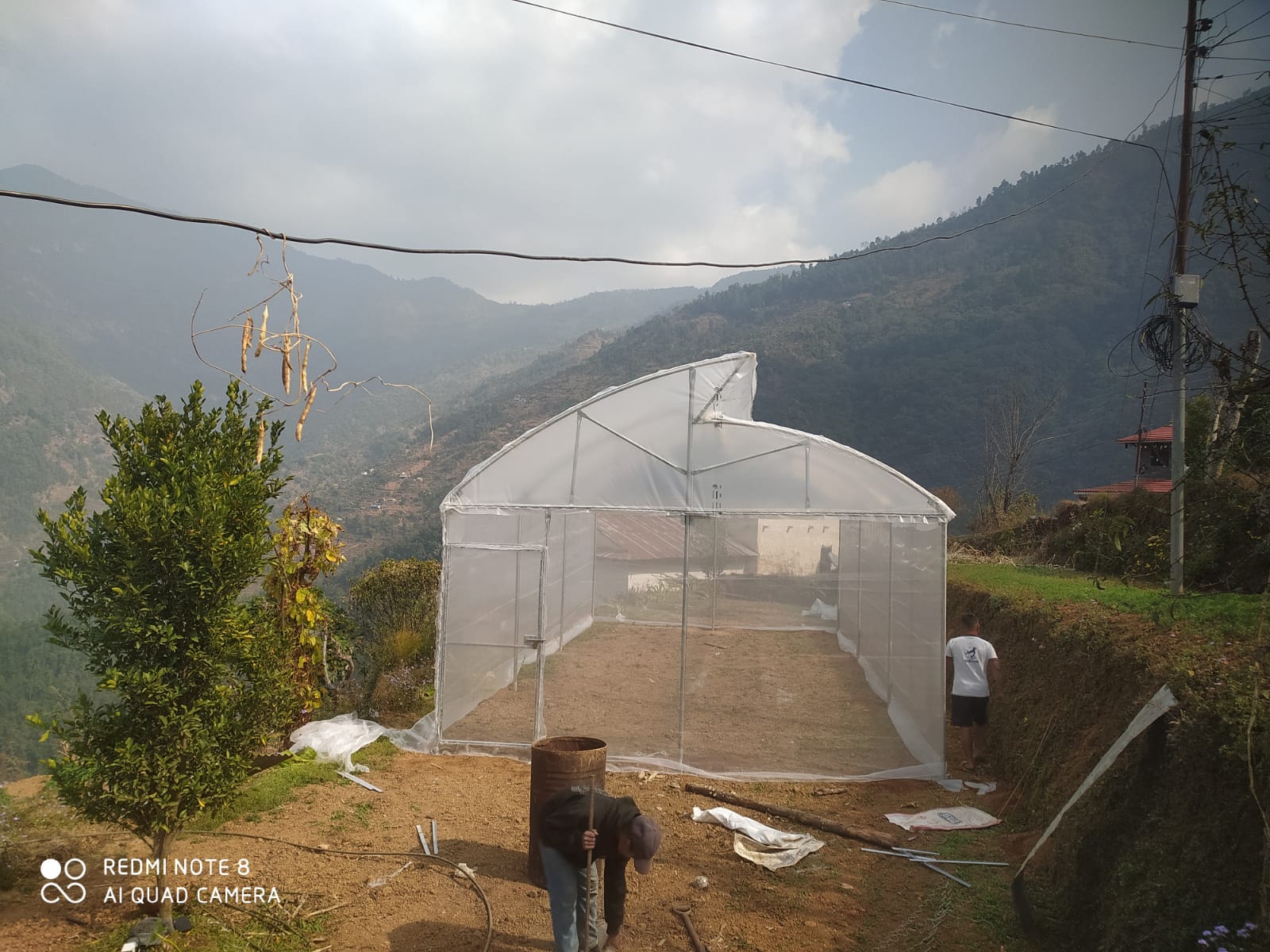
The project focuses on the installation of 183 naturally ventilated Top-Vent Semi Greenhouses, with each greenhouse designed with a 5 m × 10 m footprint.
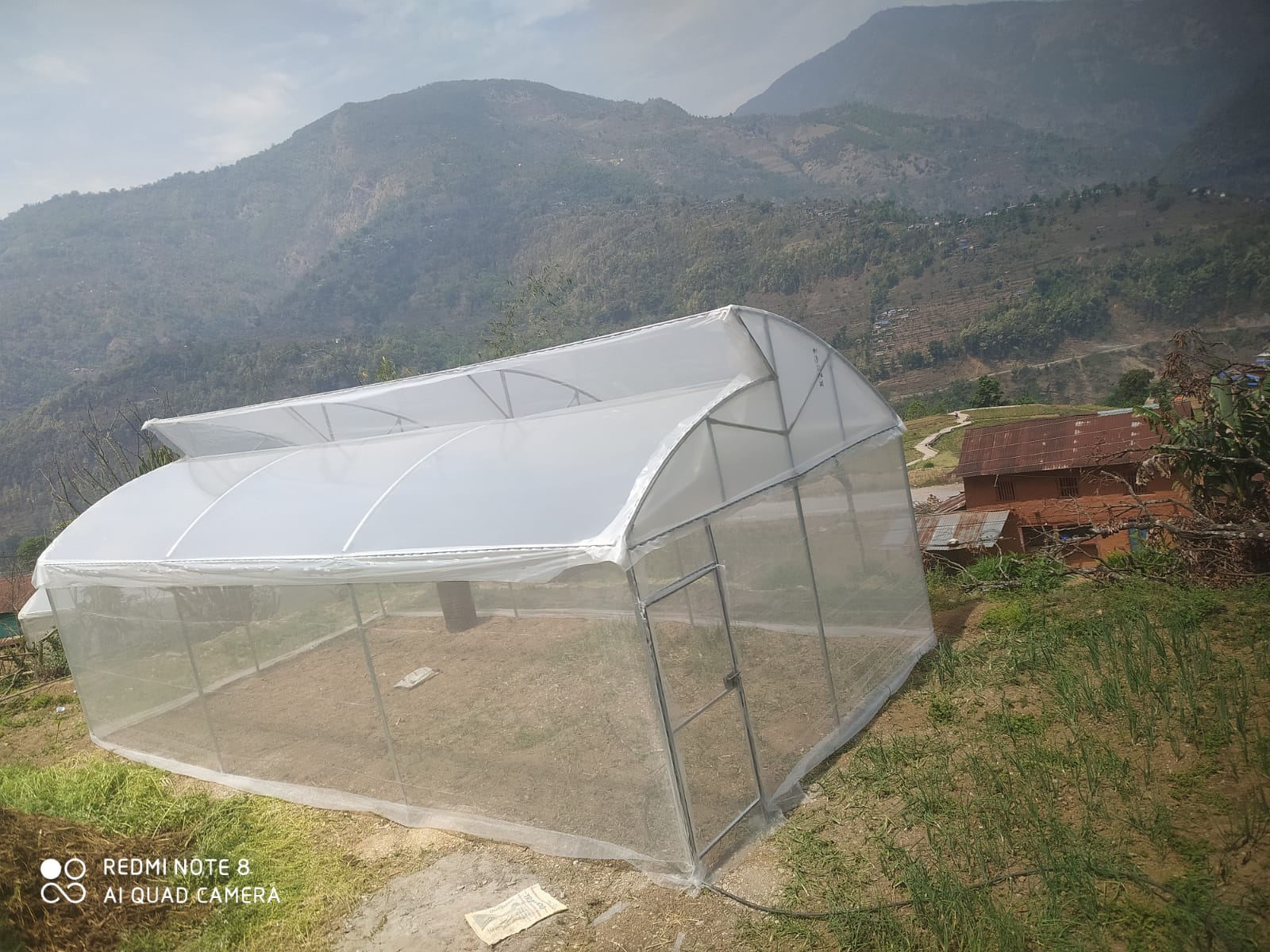
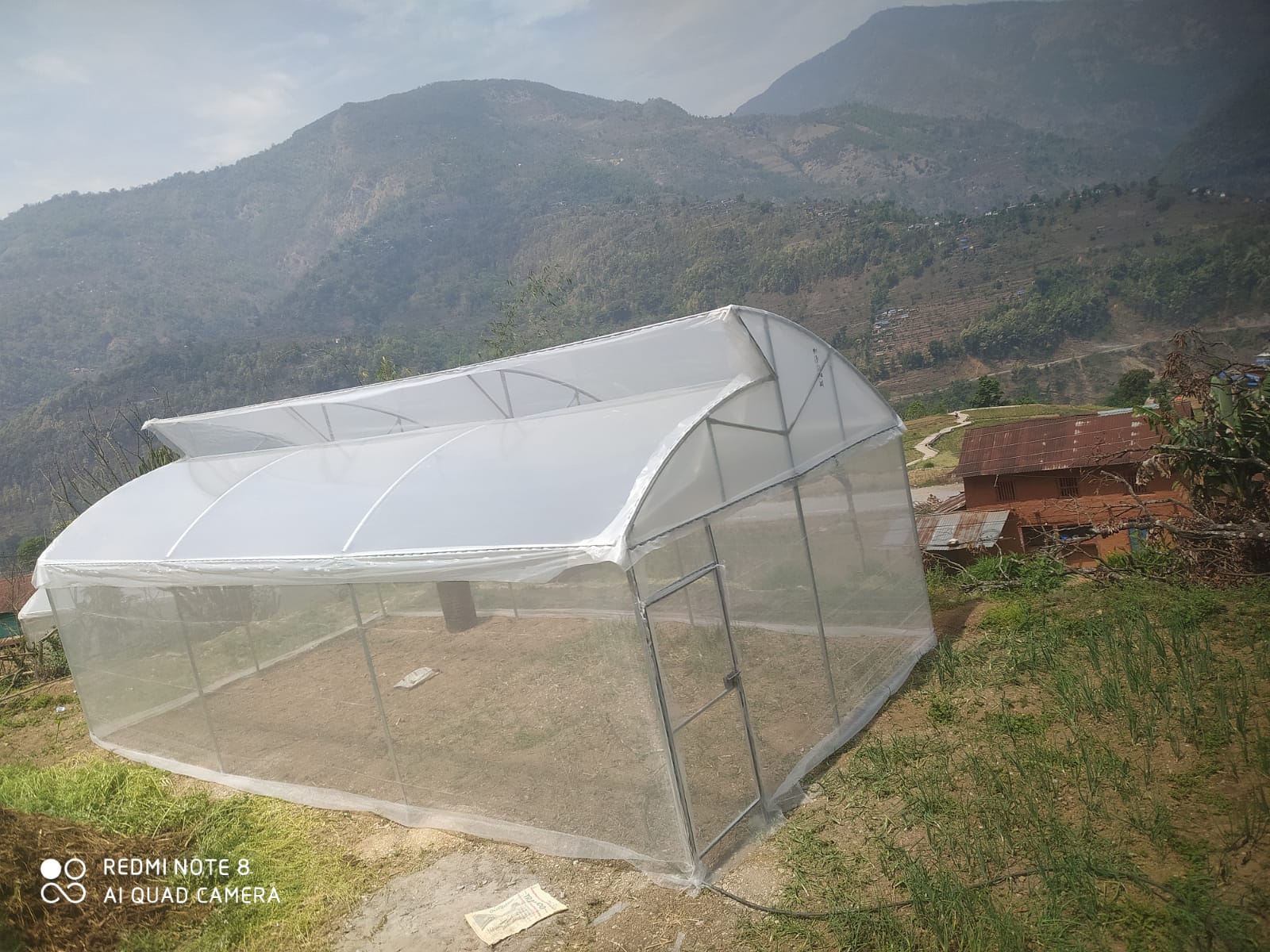
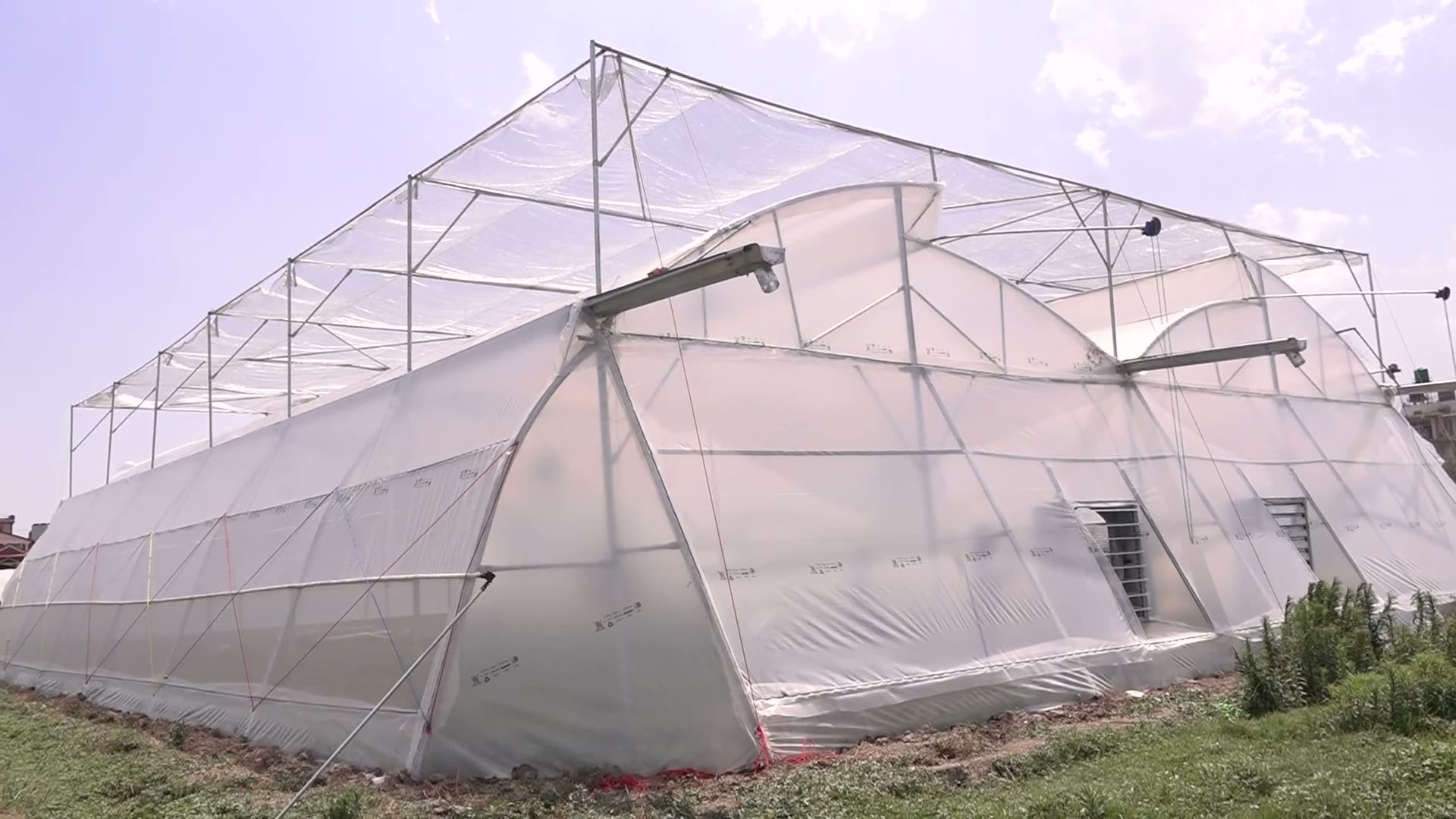
The Top-Vent design provides natural ventilation through the upper portion of the greenhouse, helping facilitate air movement within the protected growing environment. This design combines structural protection with natural ventilation, making it suitable for agricultural production under protected conditions.
The project incorporates structural, covering, ventilation, insect-protection, and associated construction components to provide a complete greenhouse system.
Top-Vent Greenhouse Design
The primary feature of the project is the Top-Vent Semi Greenhouse design. Unlike conventional covered structures, the top-vent configuration allows warm air accumulated inside the greenhouse to move upward and escape through the upper ventilation area.
This natural ventilation mechanism helps improve airflow within the structure while reducing dependence on mechanical ventilation systems. The ventilation openings are also integrated with insect-proof netting to maintain the protected nature of the greenhouse.
The design provides a practical balance between crop protection and natural environmental exchange.
Strong and Durable Structural Framework
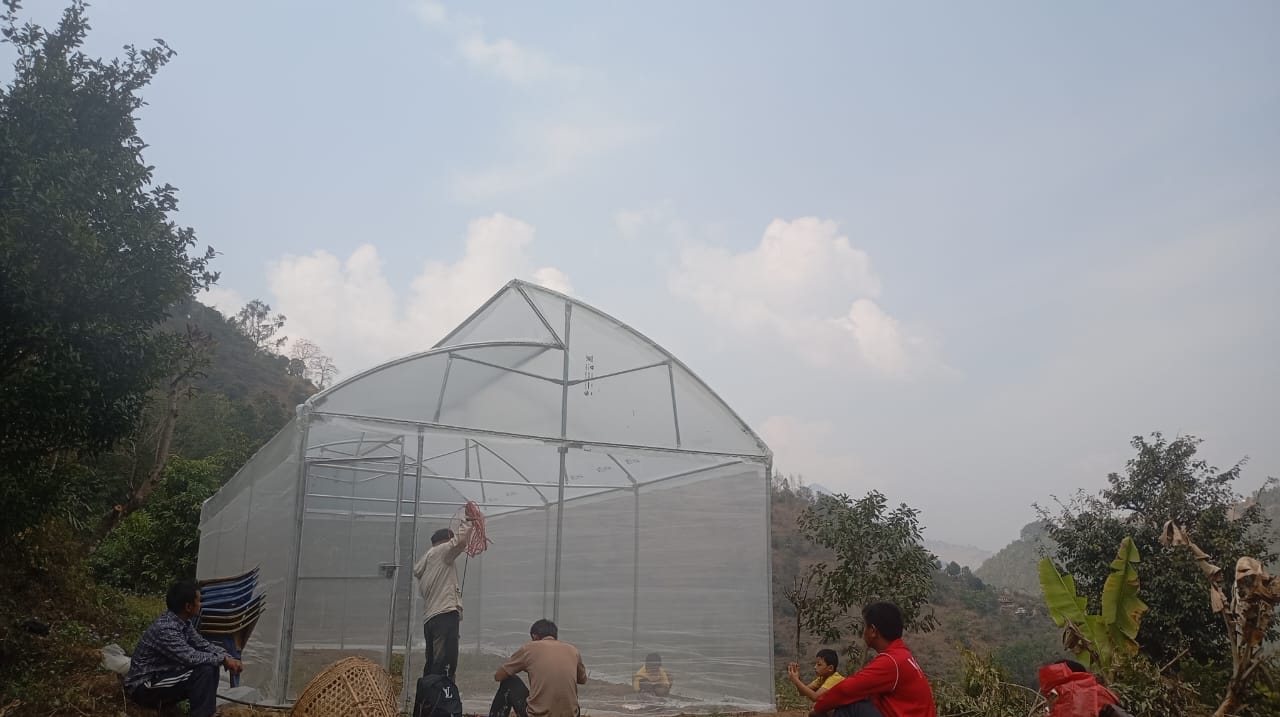
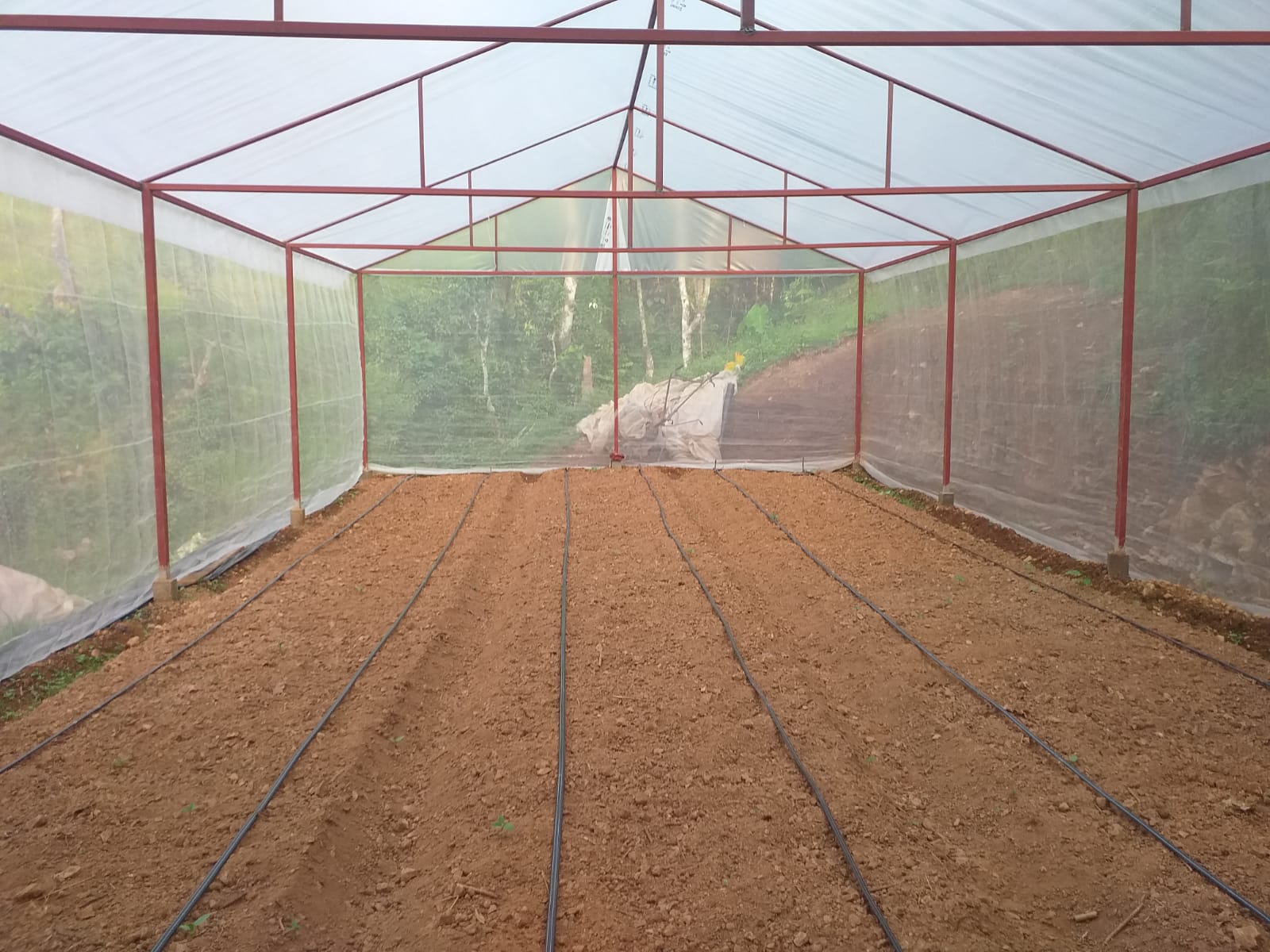
The greenhouse structures are based on a hot-dip galvanized steel pipe framework designed to provide the necessary structural support for the greenhouse covering and associated components.
The structural system incorporates columns, arches, purlins, side members, top members, and other supporting components required for the greenhouse assembly. Galvanized structural components and mechanical connections are used to provide a durable framework suitable for outdoor agricultural conditions.
The structural design and installation process are important in ensuring the stability and serviceability of the greenhouse throughout its operational life.
UV-Stabilized Greenhouse Covering
The greenhouse structures are covered with 200-micron UV-stabilized polyethylene film. The specified covering incorporates features including IR blocking and anti-drip properties, providing an appropriate covering system for protected agricultural production.
The greenhouse covering forms a controlled interface between the crop and the external environment while allowing the protected cultivation system to function effectively.
The use of UV-stabilized material also supports the durability of the covering under prolonged exposure to outdoor conditions.
Insect-Proof Protection
The project incorporates 40-mesh insect-proof netting as part of the greenhouse ventilation and side protection system.
The insect net allows ventilation while providing a physical barrier against the entry of insects into the protected cultivation area. This is particularly important in greenhouse production, where maintaining a suitable growing environment and reducing external pest entry are important considerations.
The combination of top ventilation and insect-proof netting makes the greenhouse system both naturally ventilated and protected.
Complete Greenhouse Infrastructure
The project involves more than the installation of the greenhouse frame and plastic covering. It includes the supporting works and components required to establish functional greenhouse units.
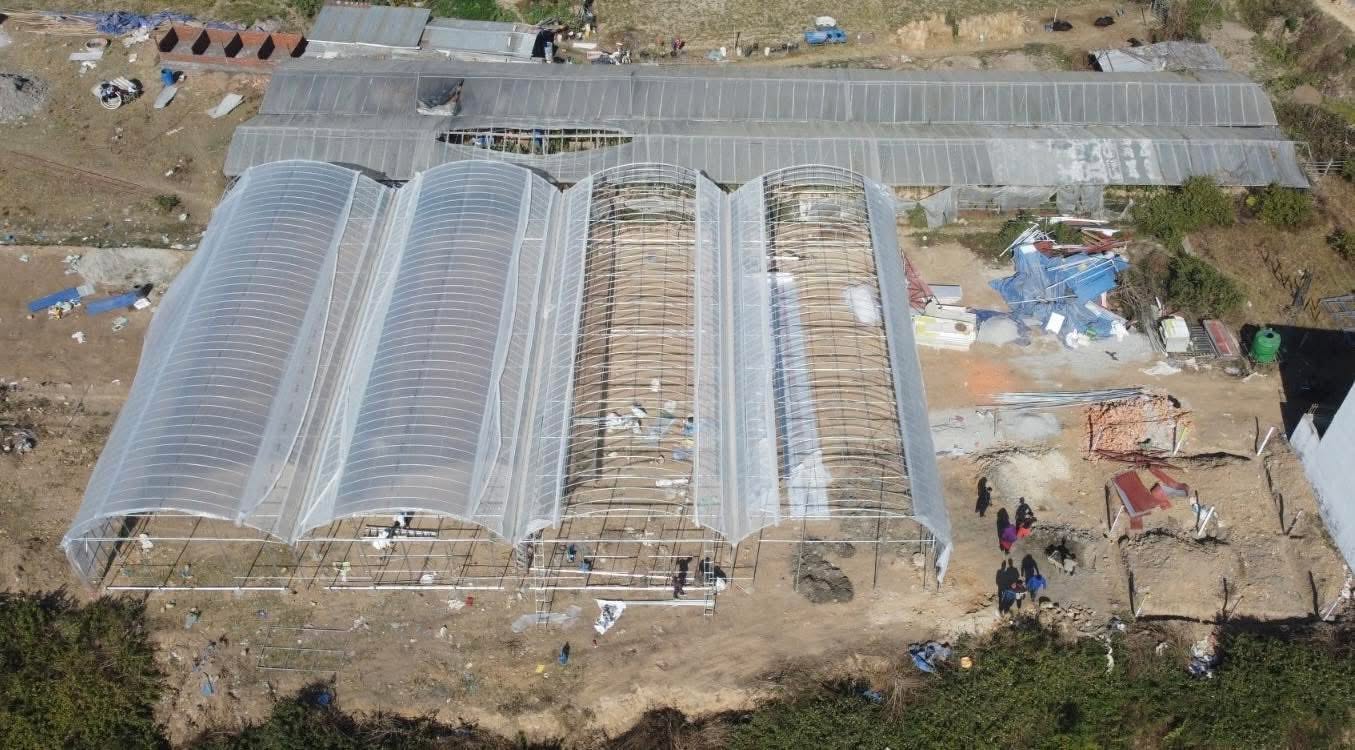
The project scope includes foundation and excavation works, stone soling, PCC works, installation of galvanized structural members, greenhouse covering, insect-proof netting, fixing profiles, doors and associated hardware, as well as transportation and installation-related activities.
Through the integration of these components, each greenhouse is developed as a complete protected cultivation structure rather than simply a covered agricultural frame.
Scale of the Project
With 183 individual greenhouse units, the Bihadi project represents a significant investment in protected agricultural infrastructure.
The scale of the project allows modern greenhouse technology to be introduced across a larger number of agricultural production units, creating opportunities for farmers to adopt protected cultivation practices and work within a more controlled production environment.
The standardized design and construction approach across the 183 units also provides consistency in structural quality, greenhouse components, and installation.
G Seven Agriculture's Contribution
The project was awarded to the JV of G Seven Agriculture Pvt. Ltd. and Bagh Bhairav Construction Pvt. Ltd.
For G Seven Agriculture, the project represents another contribution to the development of modern agricultural infrastructure in Nepal. The implementation brings together agricultural engineering knowledge, greenhouse technology, structural construction, material selection, and field installation.
Through projects of this scale, G Seven Agriculture continues to work toward providing practical infrastructure solutions that respond to the changing needs of Nepal's agricultural sector.
Project Highlights
Project: Installation of Top-Vent Semi Greenhouse
Location: Bihadi Rural Municipality, Parbat, Nepal
Total Greenhouses: 183 Units
Greenhouse Type: Top-Vent Semi Greenhouse
Individual Greenhouse Size: 5 m × 10 m
Structural Framework: Hot-Dip Galvanized Steel Pipes
Greenhouse Covering: 200-Micron UV-Stabilized Polyethylene Film
Covering Features: IR Blocking and Anti-Drip
Insect Protection: 40-Mesh Insect-Proof Net
Contractor: JV – G Seven Agriculture Pvt. Ltd. / Bagh Bhairav Construction Pvt. Ltd.
Building the Future of Protected Agriculture
The 183-unit Top-Vent Semi Greenhouse Project in Bihadi Rural Municipality, Parbat demonstrates the growing adoption of modern protected cultivation infrastructure in Nepal.
By combining a durable galvanized steel framework, top-vent natural ventilation, UV-stabilized greenhouse covering, and insect-proof protection, the project provides a practical and technically structured environment for protected agricultural production.
The project reflects G Seven Agriculture Pvt. Ltd.'s continued involvement in greenhouse design, agricultural infrastructure, and protected cultivation solutions, contributing to the modernization and development of Nepal's agricultural sector.

.png)