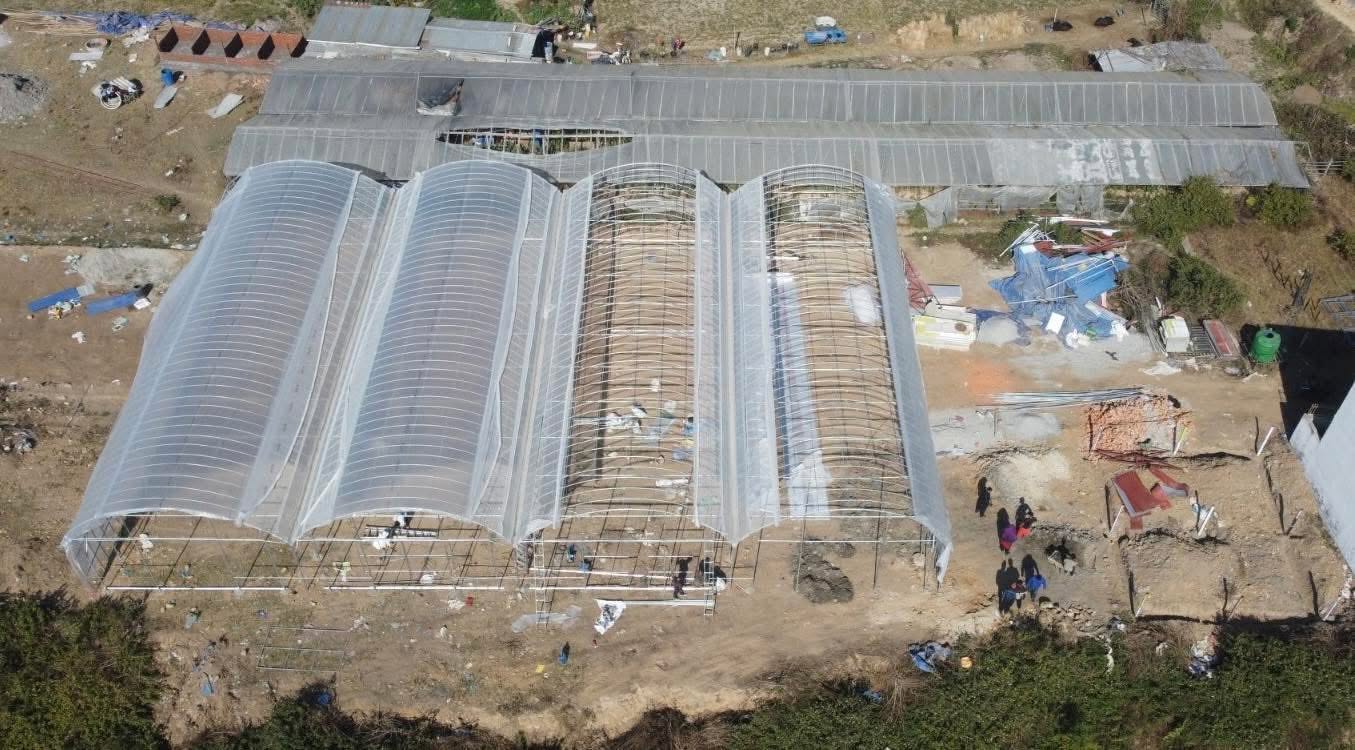
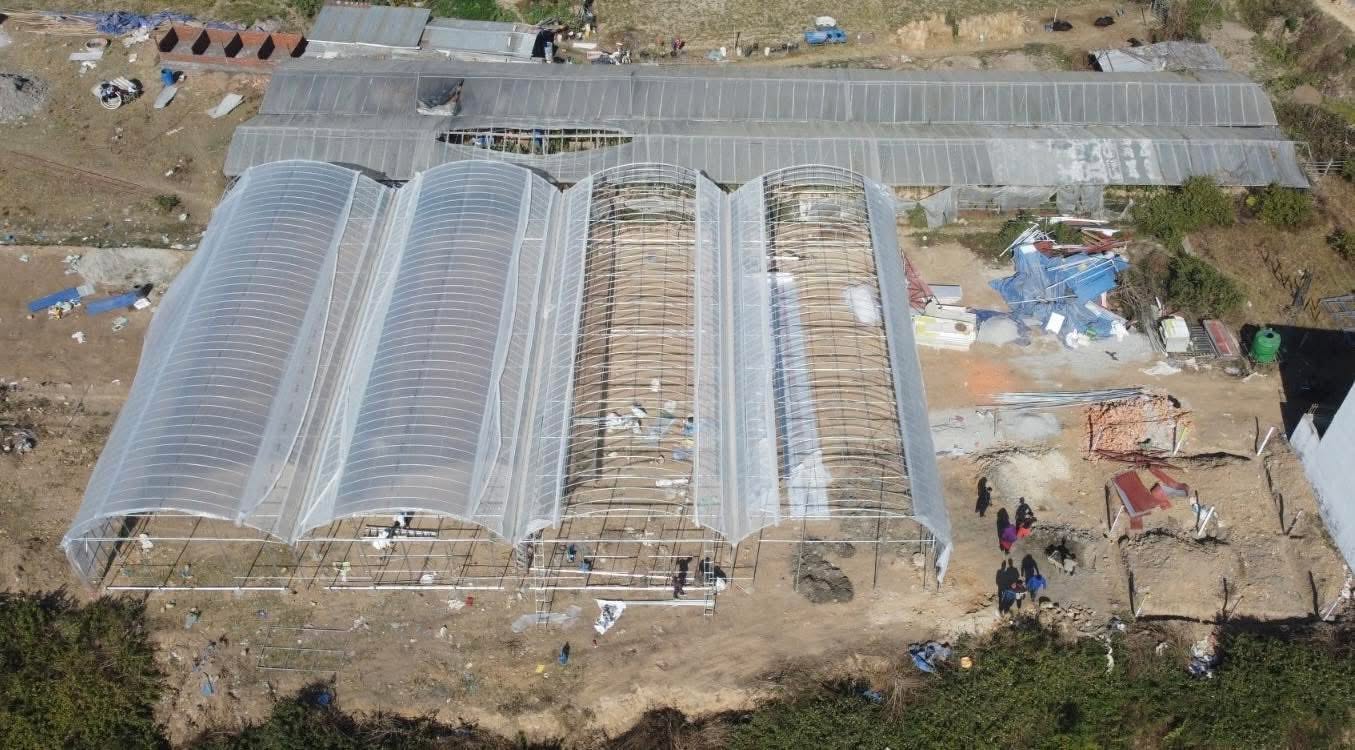
G Seven Agriculture Pvt. Ltd. successfully completed the Supply and Installation of a Combined (Naturally-Forced) Ventilated Polyhouse at the National Agricultural Engineering Research Center (NAERC), Khumaltar, Lalitpur. The project was executed under a National Competitive Bidding (NCB) process and was completed on 2083/03/04.
Developed for agricultural research and technology demonstration, this project introduced an advanced protected cultivation system designed to provide a controlled growing environment suitable for research trials, technology validation, and the evaluation of improved crop production practices.
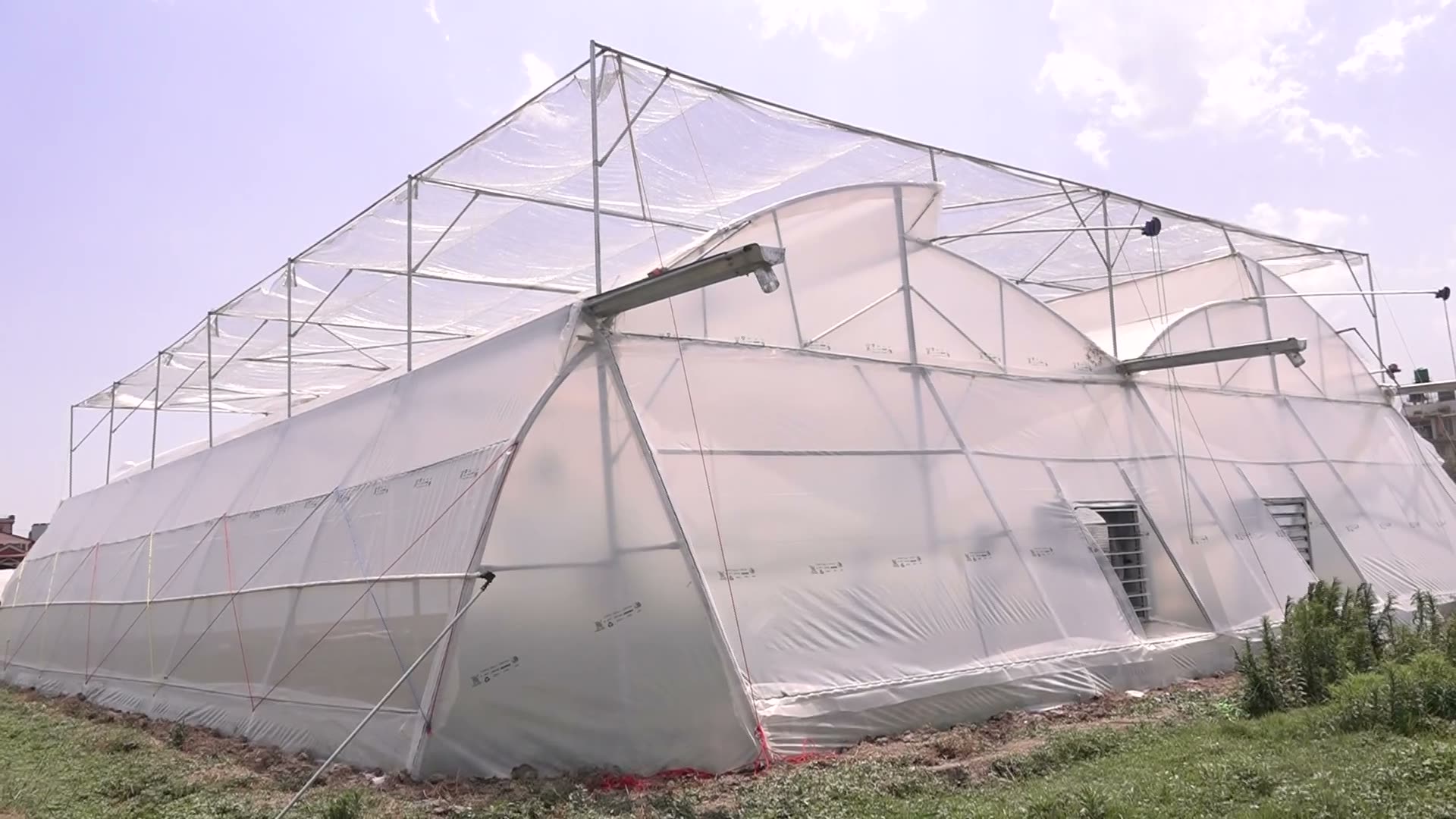
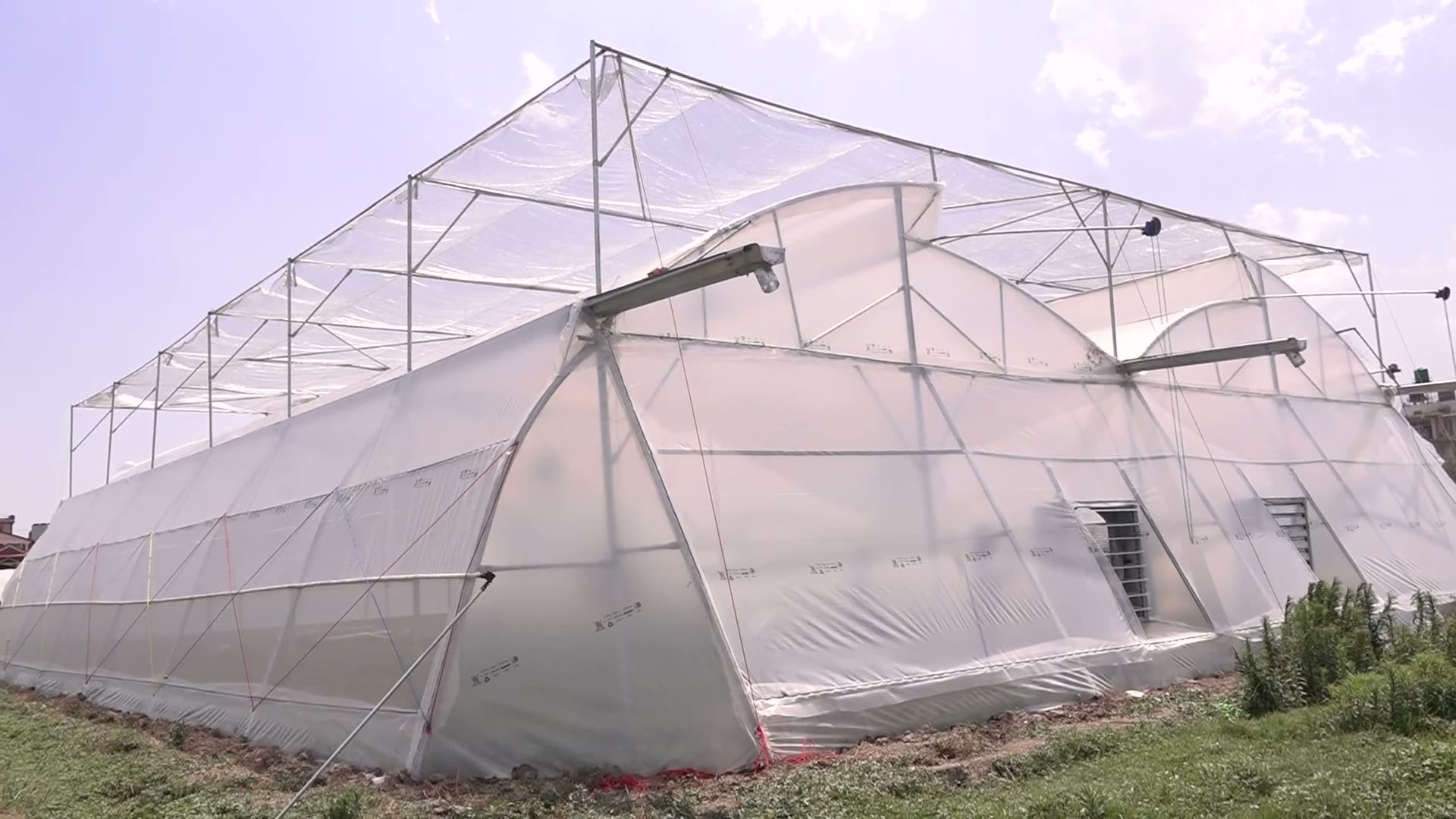
The project involved the design, supply, and installation of a modern polyhouse equipped with both natural and forced ventilation systems. Unlike conventional greenhouse structures, this facility incorporated an additional overhead structural frame specifically designed to support an external shade net system. This innovative configuration was one of the first of its kind implemented in Nepal, making the project a significant milestone in protected cultivation infrastructure.
The completed facility provides researchers with a versatile environment for conducting experiments under varying climatic conditions while improving environmental control within the growing area.
Client: National Agricultural Engineering Research Center (NAERC)
Location: Khumaltar, Lalitpur
Project Type: Combined Naturally-Forced Ventilated Polyhouse
Procurement Method: National Competitive Bidding (NCB)
Number of Units: 1
Polyhouse Size: 20 m × 28 m
Completion Date: 2083/03/04
The primary objective of the project was to establish a modern research polyhouse capable of supporting advanced agricultural engineering research and protected cultivation technologies. The facility was designed to create a stable growing environment while providing researchers with the flexibility to evaluate different crop management practices, environmental control systems, and production techniques.
The project also aimed to demonstrate innovative greenhouse technologies that could contribute to the future development of protected agriculture in Nepal.
The project included the complete supply, installation, testing, and commissioning of the polyhouse and its associated environmental control systems. Major works included:
l Construction of the galvanized steel polyhouse structure
l Installation of natural and forced ventilation systems
l Installation of exhaust fan systems
l Installation of circulation fans
l Installation of drip irrigation and fogging systems
l Installation of shade net and insect protection systems
l Electrical installation for automated components
l Testing, inspection, and final handover
The completed polyhouse incorporated several advanced engineering features designed to improve environmental control and research capability.
Key Features
l Combined naturally and forced ventilated polyhouse
l Polyhouse size: 20 m × 28 m
l High-capacity exhaust fans
l Air circulation fans
l Manual side roll-up ventilation
l Electric film rolling system
l Integrated gutter system
l External 50% shade net support structure
l Internal aluminum shade screen
l 40-mesh insect net
l Apron plastic protection
l Fogging system
l Drip irrigation system
l Double-door entry system
l Complete piping, filtration, and control accessories
One of the project's most notable engineering features was the additional structural frame constructed above the main polyhouse to support an external shade net system. This design provided enhanced solar radiation management while maintaining structural integrity and operational efficiency. As a research-oriented installation, this innovative approach represented a significant advancement in greenhouse construction practices within Nepal.
Construction activities were carried out through systematic planning, careful material management, and continuous technical supervision. The project progressed from site preparation and structural installation to the integration of environmental control systems and final commissioning.
As with many infrastructure projects, the construction team encountered challenges related to weather conditions during implementation. Through effective scheduling, coordination, and adherence to quality standards, the project was successfully completed and handed over in accordance with the project requirements.
The successful completion of this project has strengthened the research capacity of the National Agricultural Engineering Research Center by providing a modern protected cultivation facility equipped with advanced environmental control technologies.
The installation offers researchers an improved platform for evaluating crop performance, protected cultivation techniques, irrigation management, and climate control strategies under controlled conditions. Furthermore, the project's innovative overhead shade net support system demonstrates an engineering solution that may contribute to the future development of advanced greenhouse technologies in Nepal.
The successful completion of the Combined (Naturally-Forced) Ventilated Polyhouse reflects G Seven Agriculture Pvt. Ltd.'s commitment to delivering technically sound agricultural infrastructure through quality engineering, professional installation, and reliable project execution.
By implementing innovative protected cultivation systems tailored to research requirements, G Seven Agriculture continues to contribute to the advancement of modern agriculture and agricultural engineering in Nepal.
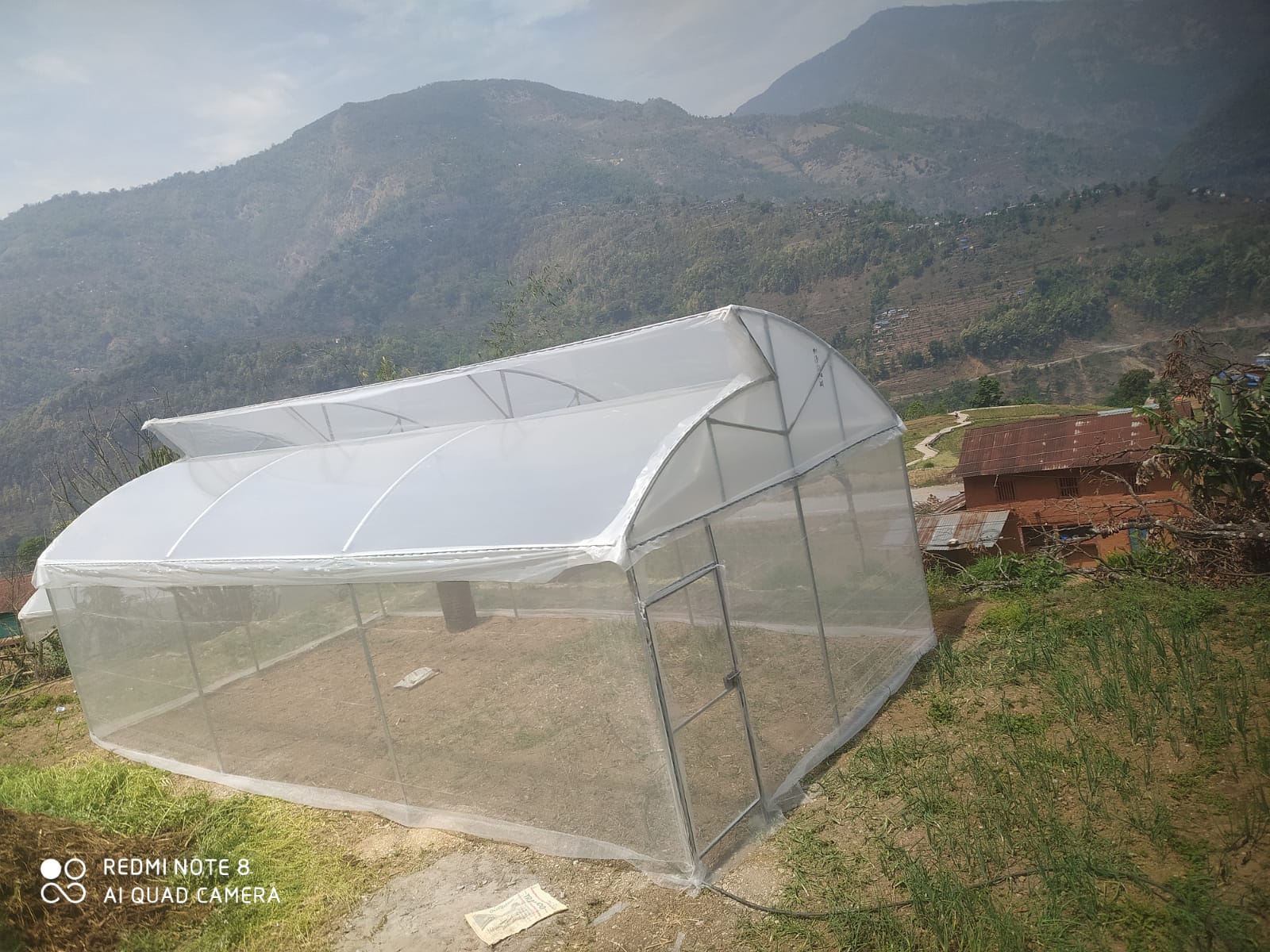
Agriculture in Nepal is increasingly adopting protected cultivation technologies to improve production conditions, enhance crop protection, and support more efficient farming practices. In line with this transition, the Bihadi Rural Municipality, Parbat initiated a large-scale protected agriculture project for the installation of 183 Top-Vent Semi Greenhouses.
The project was awarded to the Joint Venture of G Seven Agriculture Pvt. Ltd. and Bagh Bhairav Construction Pvt. Ltd., bringing together agricultural engineering and construction expertise for the development of modern greenhouse infrastructure in the municipality.
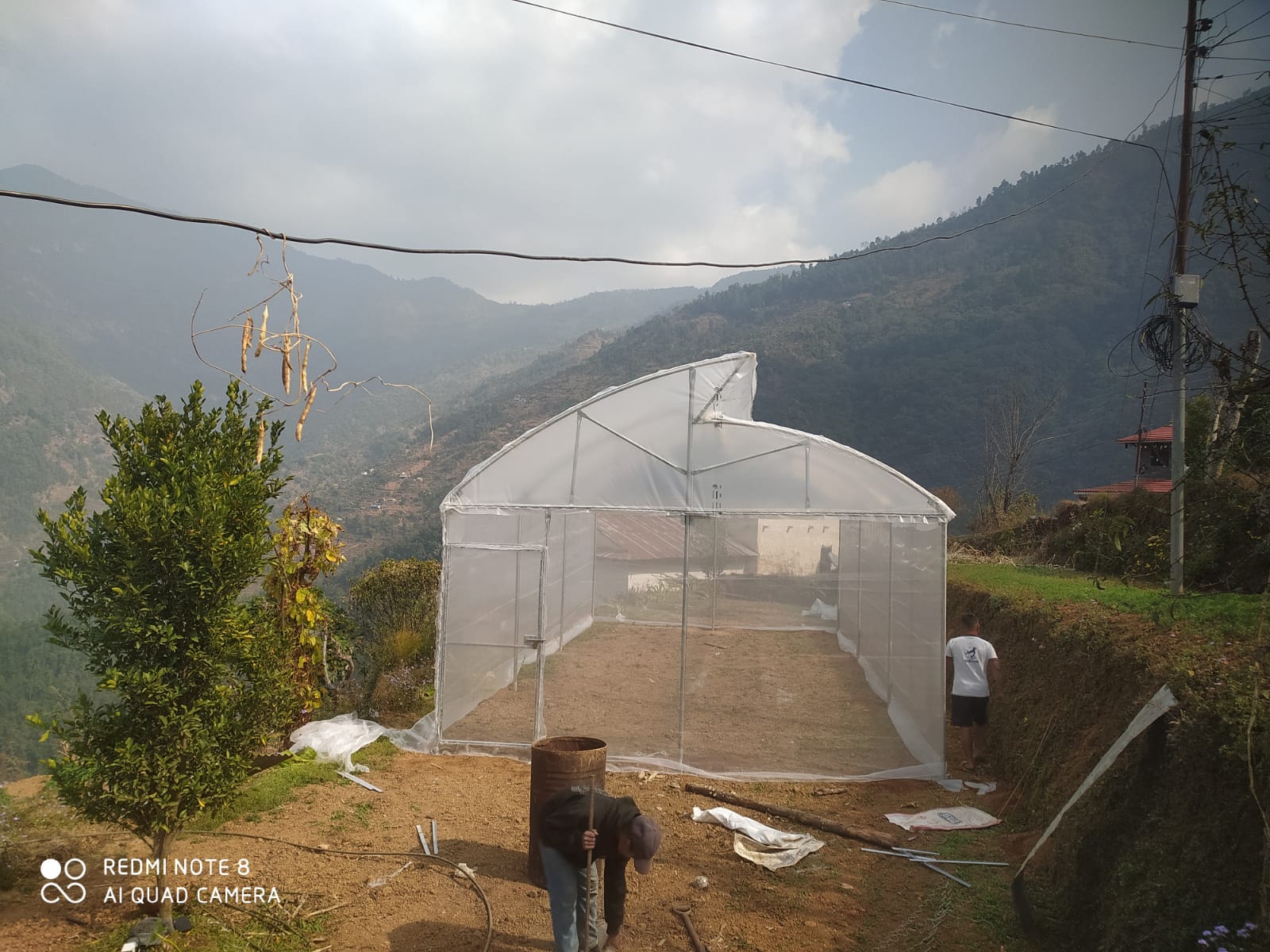
The project focuses on the installation of 183 naturally ventilated Top-Vent Semi Greenhouses, with each greenhouse designed with a 5 m × 10 m footprint.
The Top-Vent design provides natural ventilation through the upper portion of the greenhouse, helping facilitate air movement within the protected growing environment. This design combines structural protection with natural ventilation, making it suitable for agricultural production under protected conditions.
The project incorporates structural, covering, ventilation, insect-protection, and associated construction components to provide a complete greenhouse system.
The primary feature of the project is the Top-Vent Semi Greenhouse design. Unlike conventional covered structures, the top-vent configuration allows warm air accumulated inside the greenhouse to move upward and escape through the upper ventilation area.
This natural ventilation mechanism helps improve airflow within the structure while reducing dependence on mechanical ventilation systems. The ventilation openings are also integrated with insect-proof netting to maintain the protected nature of the greenhouse.
The design provides a practical balance between crop protection and natural environmental exchange.
The greenhouse structures are based on a hot-dip galvanized steel pipe framework designed to provide the necessary structural support for the greenhouse covering and associated components.
The structural system incorporates columns, arches, purlins, side members, top members, and other supporting components required for the greenhouse assembly. Galvanized structural components and mechanical connections are used to provide a durable framework suitable for outdoor agricultural conditions.
The structural design and installation process are important in ensuring the stability and serviceability of the greenhouse throughout its operational life.
The greenhouse structures are covered with 200-micron UV-stabilized polyethylene film. The specified covering incorporates features including IR blocking and anti-drip properties, providing an appropriate covering system for protected agricultural production.
The greenhouse covering forms a controlled interface between the crop and the external environment while allowing the protected cultivation system to function effectively.
The use of UV-stabilized material also supports the durability of the covering under prolonged exposure to outdoor conditions.
The project incorporates 40-mesh insect-proof netting as part of the greenhouse ventilation and side protection system.
The insect net allows ventilation while providing a physical barrier against the entry of insects into the protected cultivation area. This is particularly important in greenhouse production, where maintaining a suitable growing environment and reducing external pest entry are important considerations.
The combination of top ventilation and insect-proof netting makes the greenhouse system both naturally ventilated and protected.
The project involves more than the installation of the greenhouse frame and plastic covering. It includes the supporting works and components required to establish functional greenhouse units.
The project scope includes foundation and excavation works, stone soling, PCC works, installation of galvanized structural members, greenhouse covering, insect-proof netting, fixing profiles, doors and associated hardware, as well as transportation and installation-related activities.
Through the integration of these components, each greenhouse is developed as a complete protected cultivation structure rather than simply a covered agricultural frame.
With 183 individual greenhouse units, the Bihadi project represents a significant investment in protected agricultural infrastructure.
The scale of the project allows modern greenhouse technology to be introduced across a larger number of agricultural production units, creating opportunities for farmers to adopt protected cultivation practices and work within a more controlled production environment.
The standardized design and construction approach across the 183 units also provides consistency in structural quality, greenhouse components, and installation.
The project was awarded to the JV of G Seven Agriculture Pvt. Ltd. and Bagh Bhairav Construction Pvt. Ltd.
For G Seven Agriculture, the project represents another contribution to the development of modern agricultural infrastructure in Nepal. The implementation brings together agricultural engineering knowledge, greenhouse technology, structural construction, material selection, and field installation.
Through projects of this scale, G Seven Agriculture continues to work toward providing practical infrastructure solutions that respond to the changing needs of Nepal's agricultural sector.
Project: Installation of Top-Vent Semi Greenhouse
Location: Bihadi Rural Municipality, Parbat, Nepal
Total Greenhouses: 183 Units
Greenhouse Type: Top-Vent Semi Greenhouse
Individual Greenhouse Size: 5 m × 10 m
Structural Framework: Hot-Dip Galvanized Steel Pipes
Greenhouse Covering: 200-Micron UV-Stabilized Polyethylene Film
Covering Features: IR Blocking and Anti-Drip
Insect Protection: 40-Mesh Insect-Proof Net
Contractor: JV – G Seven Agriculture Pvt. Ltd. / Bagh Bhairav Construction Pvt. Ltd.
The 183-unit Top-Vent Semi Greenhouse Project in Bihadi Rural Municipality, Parbat demonstrates the growing adoption of modern protected cultivation infrastructure in Nepal.
By combining a durable galvanized steel framework, top-vent natural ventilation, UV-stabilized greenhouse covering, and insect-proof protection, the project provides a practical and technically structured environment for protected agricultural production.
The project reflects G Seven Agriculture Pvt. Ltd.'s continued involvement in greenhouse design, agricultural infrastructure, and protected cultivation solutions, contributing to the modernization and development of Nepal's agricultural sector.
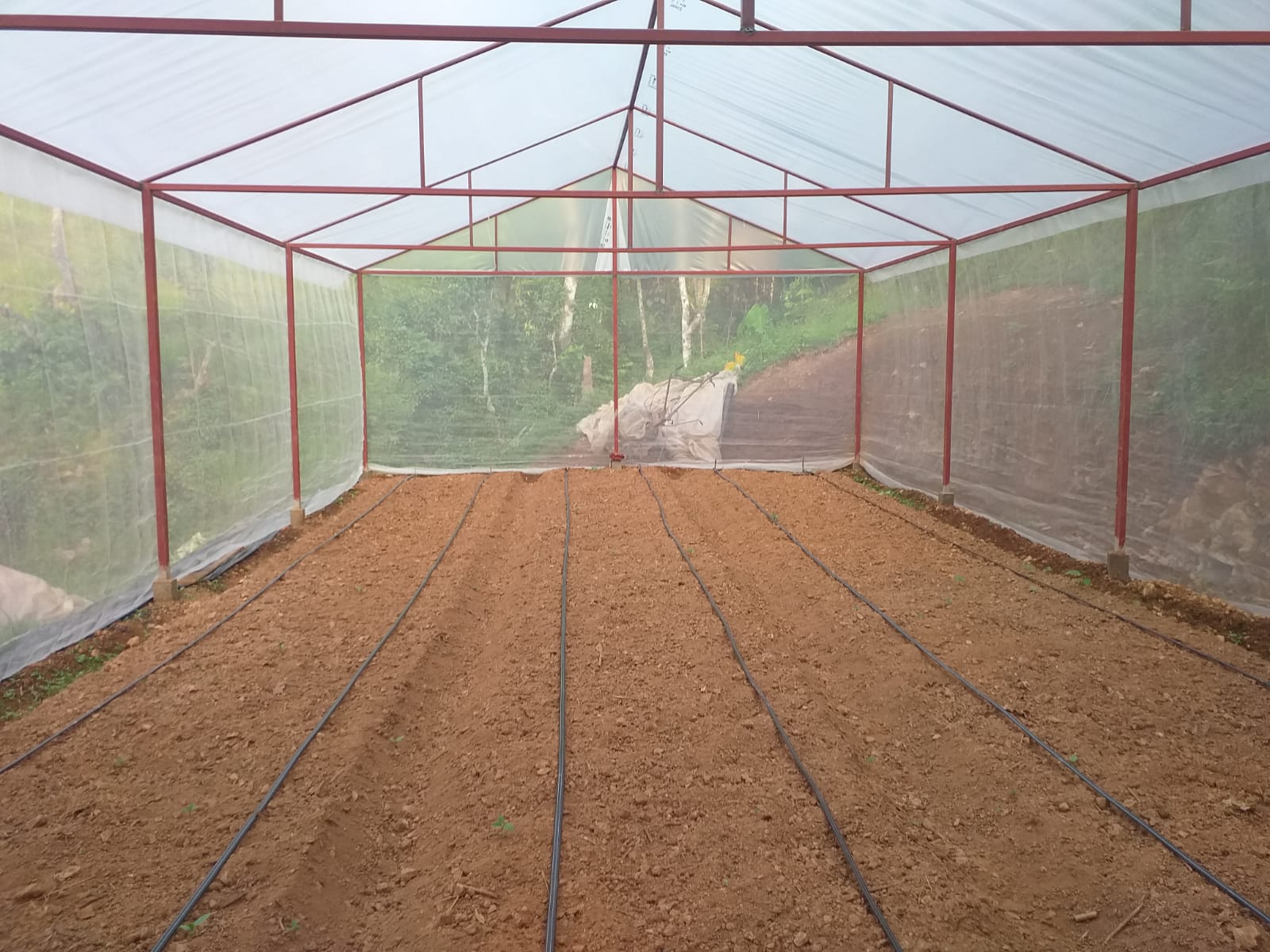
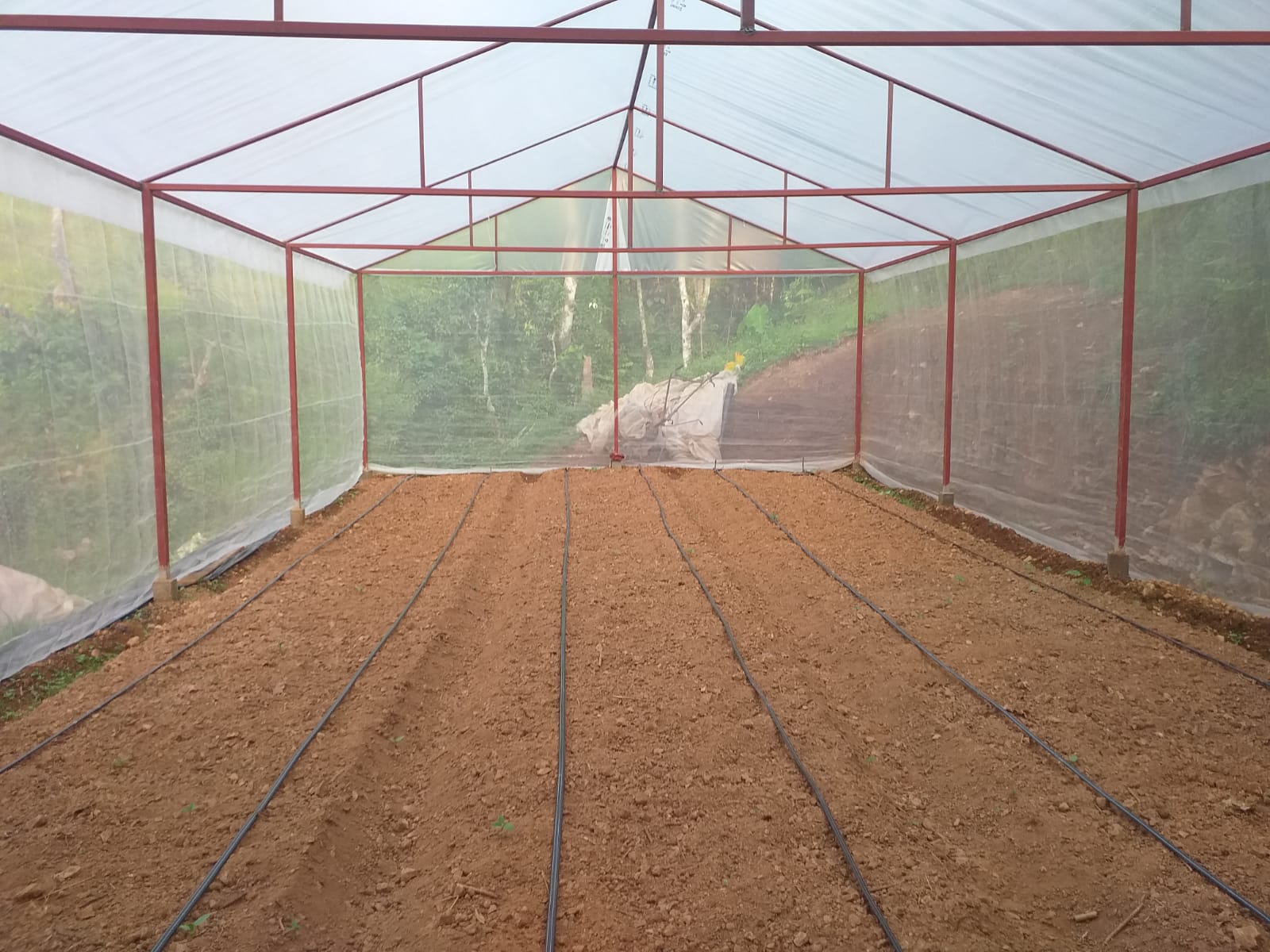
G Seven Agriculture Pvt. Ltd. successfully completed the Construction of 87 Permanent Agricultural Plastic Tunnels in Nisdi Rural Municipality, Mityal, Palpa under a National Competitive Bidding (NCB) contract. The project was implemented to support farmers with durable protected cultivation structures and modern agricultural facilities designed to improve crop production and farming efficiency.
The project focused on establishing permanent agricultural plastic tunnels to provide farmers with a more controlled growing environment and protection from adverse weather conditions. Along with the tunnel structures, the project also included drip irrigation systems to support efficient water management and improve agricultural productivity.
Through the successful completion of this project, G Seven Agriculture contributed to expanding protected agriculture practices and providing farmers in Nisdi Rural Municipality with improved infrastructure for commercial and sustainable crop cultivation.
· Client: Nisdi Rural Municipality
· Project: Construction of Permanent Agricultural Plastic Tunnels
· Location: Nisdi Rural Municipality, Mityal, Palpa
· Procurement Method: National Competitive Bidding (NCB)
· Contract Identification No.: NCB/NRM/WORKS/2082/83-05
· Number of Tunnels: 87 Units
· Tunnel Size: 6 m × 12 m
The project included the supply, construction, and installation of 87 permanent agricultural plastic tunnels in accordance with the approved technical specifications.
The scope of work included foundation preparation, stone soling and concrete foundation works, installation of the iron/MS pipe structure, structural painting, installation of zigzag profiles, doors and hardware, plastic covering, insect net installation, and drip irrigation system installation.
The project also included the installation of 87 drip irrigation sets, each equipped with a 50-liter water drum, providing farmers with an efficient irrigation solution for protected cultivation.
The agricultural tunnels were constructed using quality materials and durable structural components to ensure reliable performance and long-term use.
Key Specifications:
· Greenhouse Size: 6 m × 12 m
· Structure Type: Permanent Iron/MS Pipe Structure
· Structural Profile: Zigzag Profile
· Greenhouse Cover: 200 GSM UV Plastic Sheet
· Insect Protection: 40 Mesh UV Insect Net
· Drip Irrigation: Drip Irrigation Kit with 50-Liter Drum
· Total Tunnel Units: 87
· Total Drip Irrigation Sets: 87
These specifications were selected to provide improved crop protection, ventilation, structural stability, and efficient irrigation for protected agricultural production.
The construction work was carried out through systematic site preparation, material management, structural installation, and on-site supervision. Each tunnel was constructed according to the approved design and technical requirements to ensure structural stability and suitability for agricultural use.
The project team managed the installation of structural components, covering materials, insect protection systems, and irrigation facilities while maintaining proper coordination throughout the construction process.
The integration of protected tunnel structures and drip irrigation systems provides farmers with a more efficient and controlled production environment, supporting better utilization of available agricultural resources.
The successful completion of 87 permanent agricultural plastic tunnels provides farmers in Nisdi Rural Municipality with improved infrastructure for protected cultivation.
The tunnels help protect crops from unfavorable weather conditions while creating a more suitable growing environment. The addition of drip irrigation systems further supports efficient water use and improved crop management.
The project contributes to the adoption of modern agricultural technologies and strengthens opportunities for sustainable and productive farming in Nisdi Rural Municipality, Palpa.
G Seven Agriculture Pvt. Ltd. remains committed to delivering high-quality agricultural infrastructure through professional engineering, quality construction, and effective project execution.
With experience in greenhouse and polyhouse construction, protected cultivation, drip irrigation systems, and modern agricultural solutions, the company continues to support government agencies, development organizations, cooperatives, and farmers in implementing practical and sustainable agricultural infrastructure throughout Nepal.
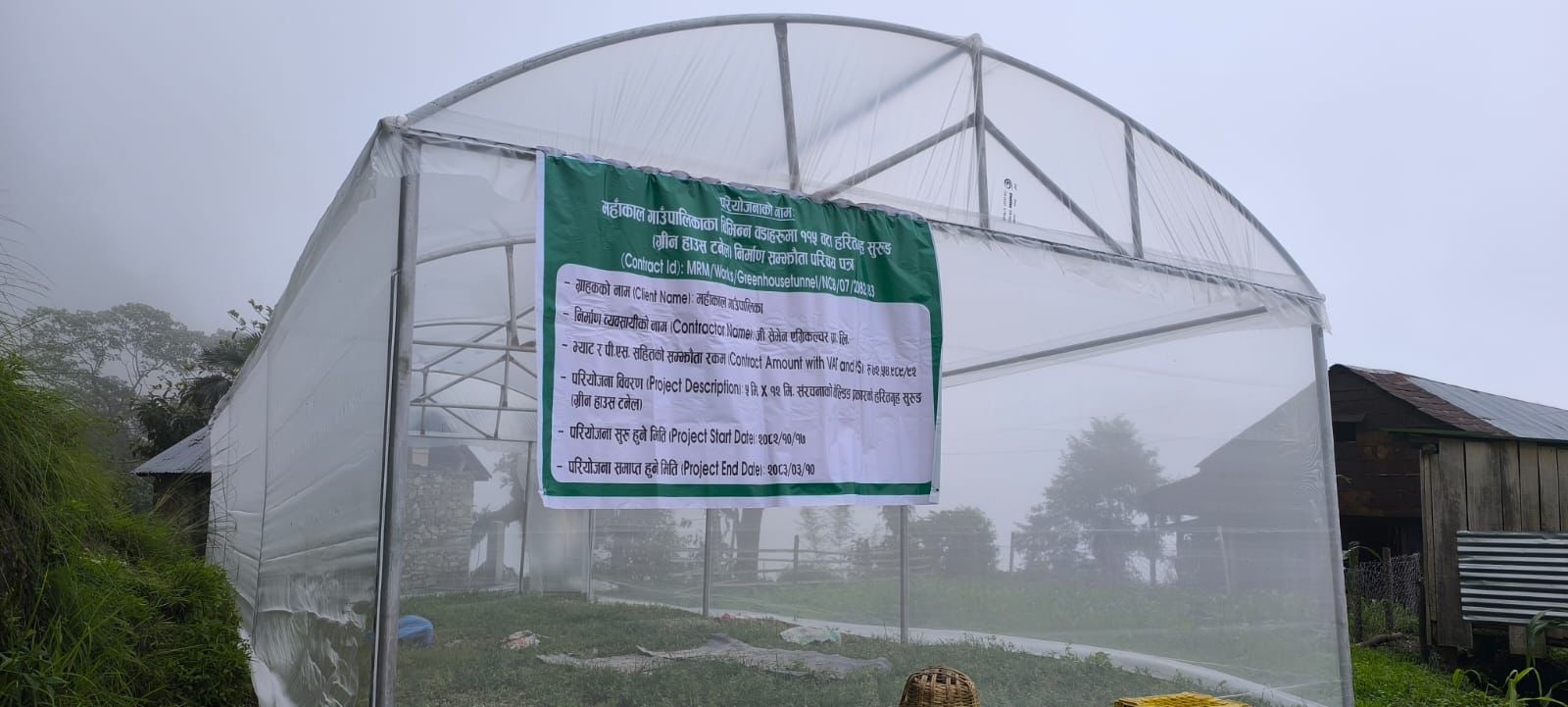
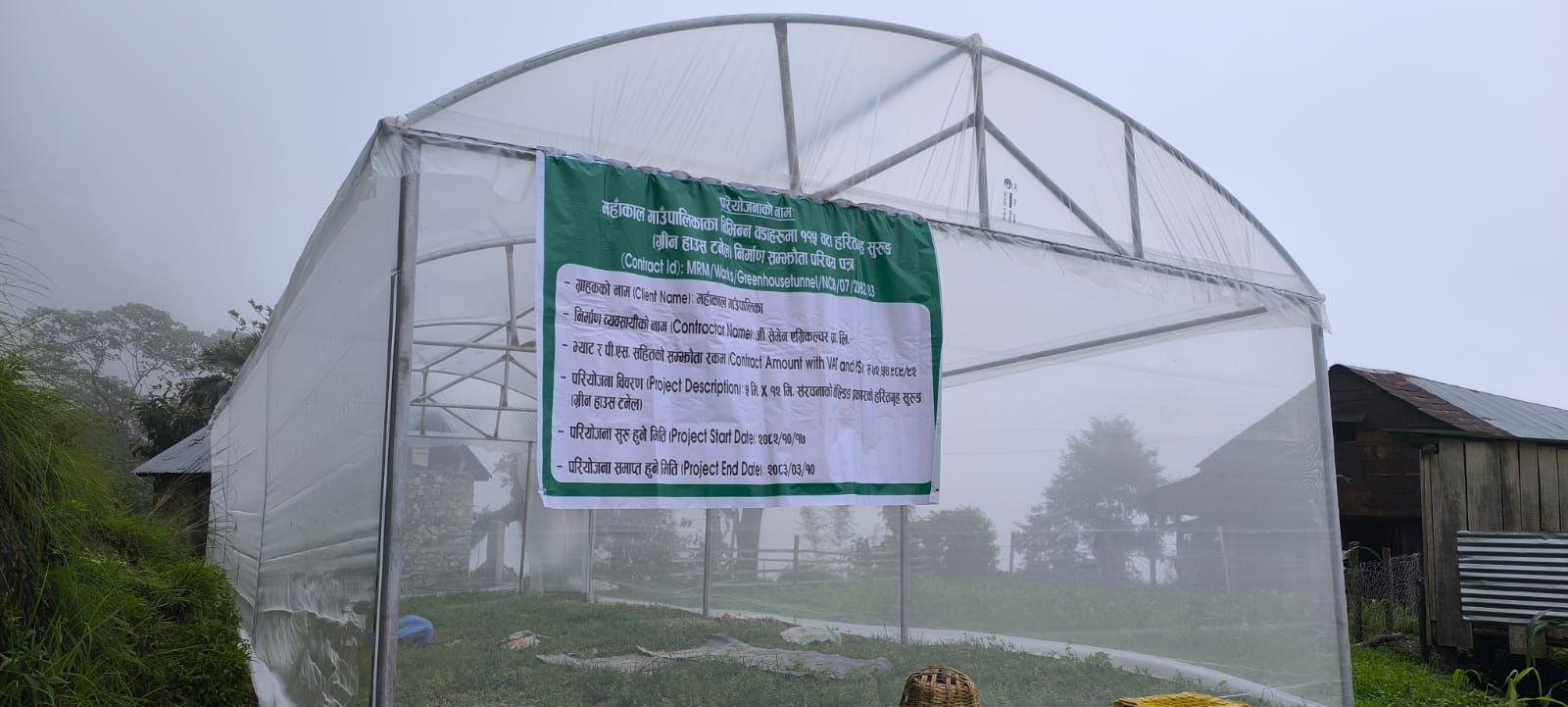
G Seven Agriculture Pvt. Ltd. successfully completed the Construction of 115 Greenhouse Tunnels in different wards of Mahankal Rural Municipality under a National Competitive Bidding (NCB) contract. The project was completed on time, delivering high-quality protected cultivation structures designed to promote commercial vegetable production and improve agricultural productivity.
This project was undertaken to support farmers by providing durable greenhouse tunnels that enable year-round cultivation under controlled growing conditions. Through the successful completion of this project, G Seven Agriculture contributed to strengthening protected agriculture practices and improving farming opportunities within Mahankal Rural Municipality.
· Client: Mahankal Rural Municipality
· Project: Construction of 115 Greenhouse Tunnels
· Location: Different Wards of Mahankal Rural Municipality
· Procurement Method: National Competitive Bidding (NCB)
· Number of Greenhouses: 115 Units
The project included the supply, construction, and installation of 115 greenhouse tunnels in accordance with the approved technical specifications. Each structure was carefully installed to ensure durability, structural stability, and suitability for commercial vegetable cultivation.
The work included site preparation, structural installation, covering installation, quality inspection, and final handover.
Each greenhouse tunnel was constructed using quality materials to ensure long-term performance and reliable crop protection.
Key Specifications:
· Greenhouse Size: 5 m × 12 m
· Structure Type: MS Pipe Dome House
· Greenhouse Cover: 100 Micron UV-Stabilized Plastic
· Insect Protection: 40 Mesh Insect Net
· Total Units Installed: 115
These specifications were selected to provide adequate ventilation, crop protection, and an improved growing environment suitable for protected agriculture.
The construction work was carried out through systematic planning, material management, and on-site supervision. Every stage of the project was monitored to ensure compliance with the approved design and technical requirements.
Despite seasonal rainfall and occasional power interruptions during the construction period, the project team effectively managed site activities and maintained the quality of work through proper planning and coordination. The project was successfully completed within the contractual requirements.
The successful completion of 115 greenhouse tunnels provides farmers with improved facilities for protected cultivation, helping reduce weather-related production risks while supporting higher-quality crop production. The project also contributes to promoting modern agricultural practices and sustainable farming in the region.
G Seven Agriculture Pvt. Ltd. remains committed to delivering high-quality agricultural infrastructure through professional engineering, quality construction, and timely project execution. With experience in greenhouse construction, irrigation systems, and modern agricultural solutions, the company continues to support government agencies, development organizations, cooperatives, and private farmers in advancing sustainable agriculture throughout Nepal.


© 2022 G Seven Agriculture Pvt. Ltd. All Rights Reserved | Design by Eastlink Cloud