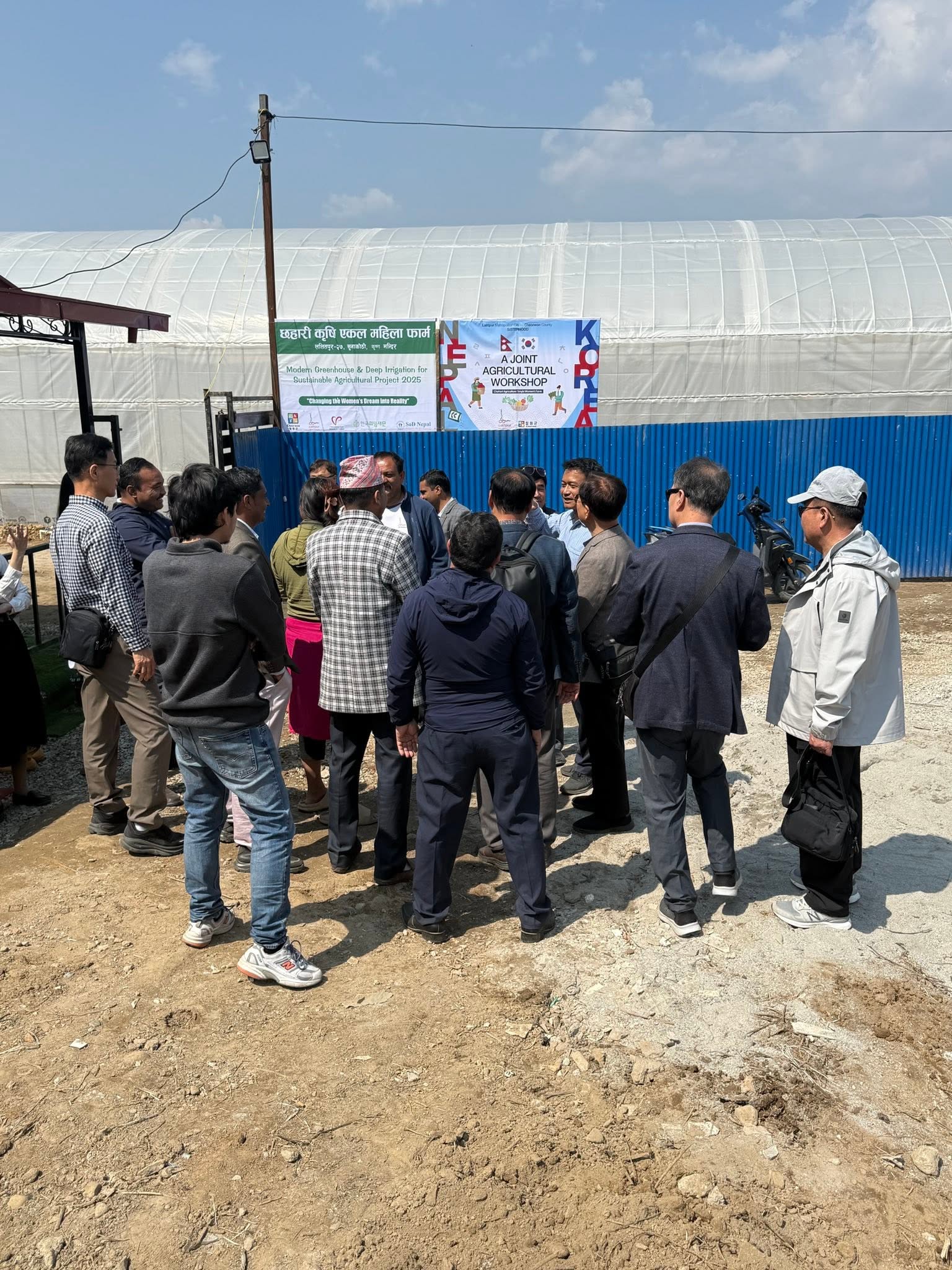
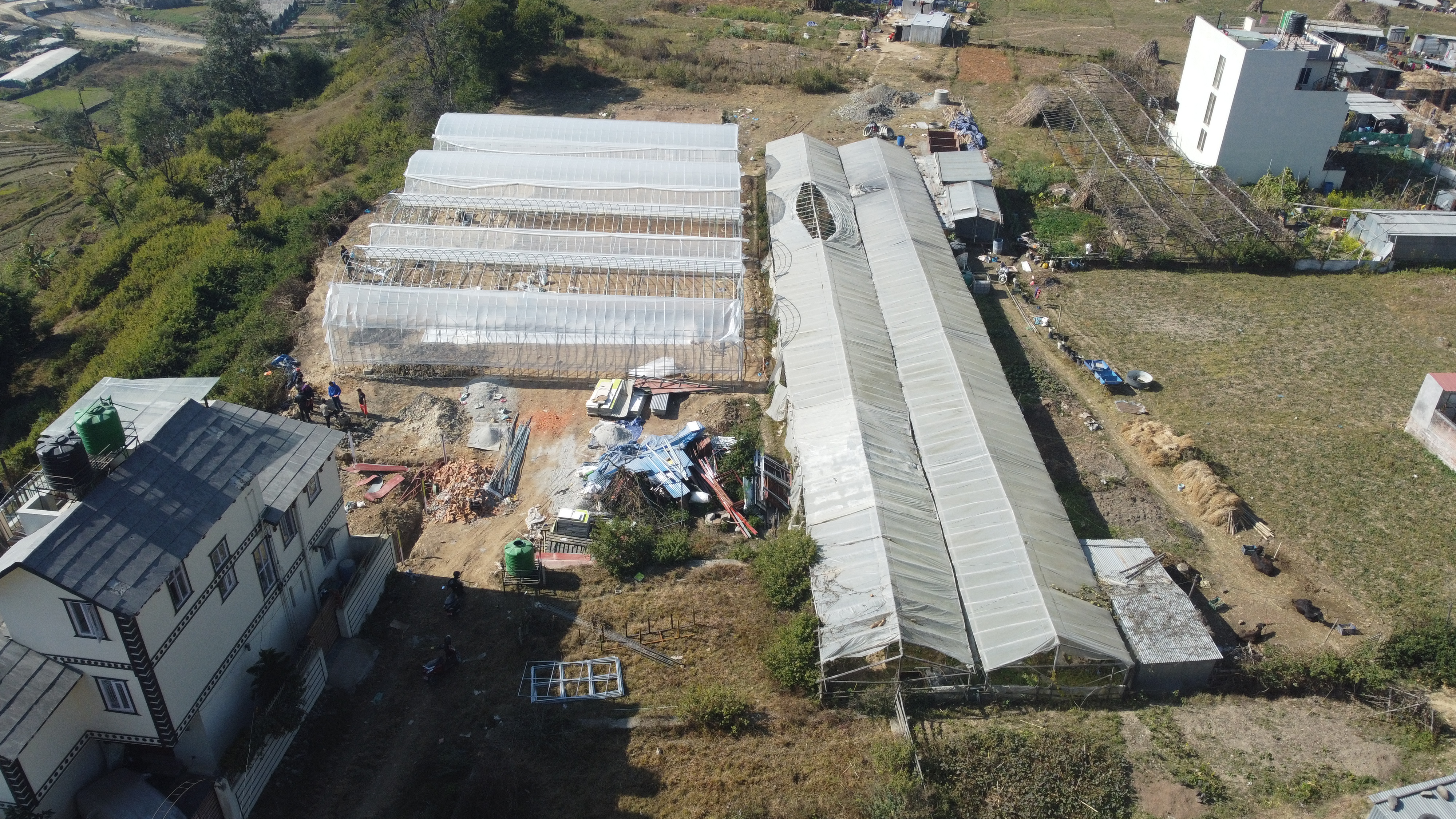
A New Chapter in Protected Agriculture: 21 m × 32 m Quonset Greenhouse at Sunakothi
Date: 2026-08-25 05:38:30
Projects
Share:
Project Year: 2082/83 B.S.
Location: Sunakothi, Nepal
Project: Supply and Installation of 21 m × 32 m Quonset-Shaped Greenhouse
Beneficiary: Ek Mahila Krishi Farm, Sunakothi
Finacial Support: SOLIDARITY FOR DEVELOPEMNT NEPAL/Chorreng Municipality, Korea
Support:Laltipur Metropolitant city
Implemented by: G Seven Agriculture Pvt. Ltd.
Introduction
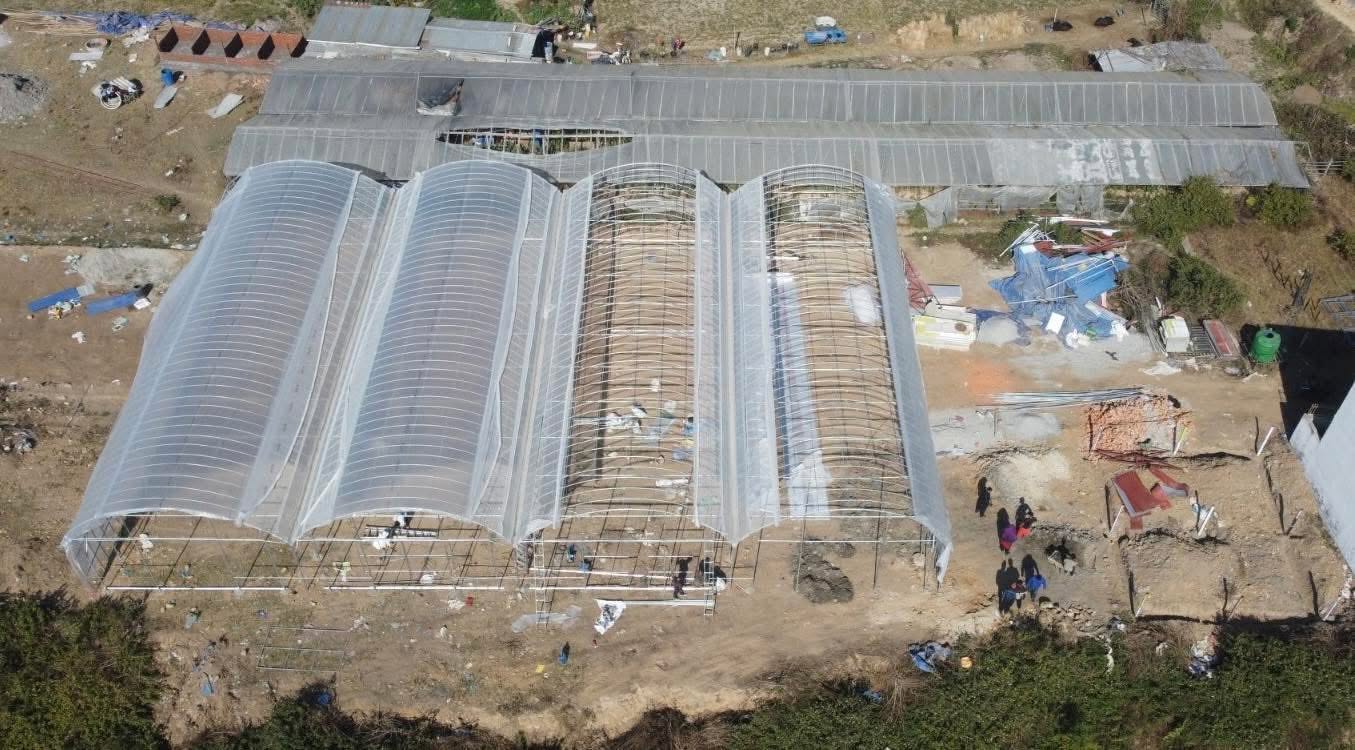
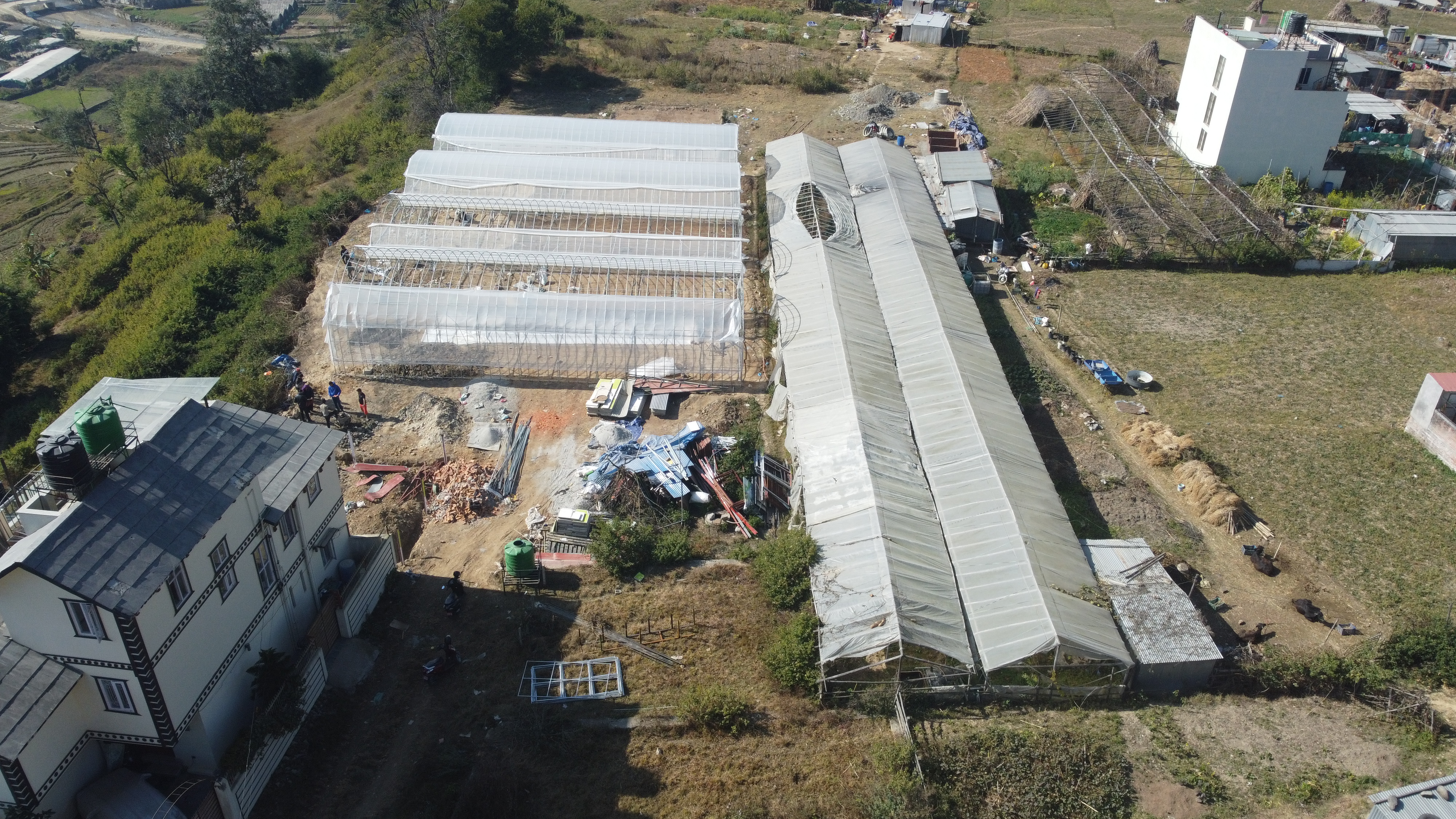
Agricultural infrastructure is most valuable when it is designed around the actual needs of farmers. With this approach, G Seven Agriculture Pvt. Ltd. completed the supply and installation of a 21 m × 32 m Quonset-shaped greenhouse in Sunakothi during the fiscal year 2082/83.
The project was supported by SOLIDARITY FOR DEVELOPEMNT NEPAL/Chorreng Municipality of Korea and Laltipur Metropolitan city with the objective of supporting Ek Mahila Krishi Farm, Sunakothi, and was carried out as a contract project rather than through a conventional tender process.
What made this project particularly significant was its design. The large-scale Quonset greenhouse incorporated a combination of GI pipe framing, UV-protected plastic covering, insect protection, shading, roll-up systems, hail protection, safety netting, and integrated drip and fogger irrigation systems.
The project represented a new type of greenhouse application for Nepal and required considerable technical research and planning before installation.
A 21 m × 32 m Greenhouse Designed for Practical Farm Operation
The greenhouse covers a footprint of approximately 672 square meters, with dimensions of 21 m × 32 m.
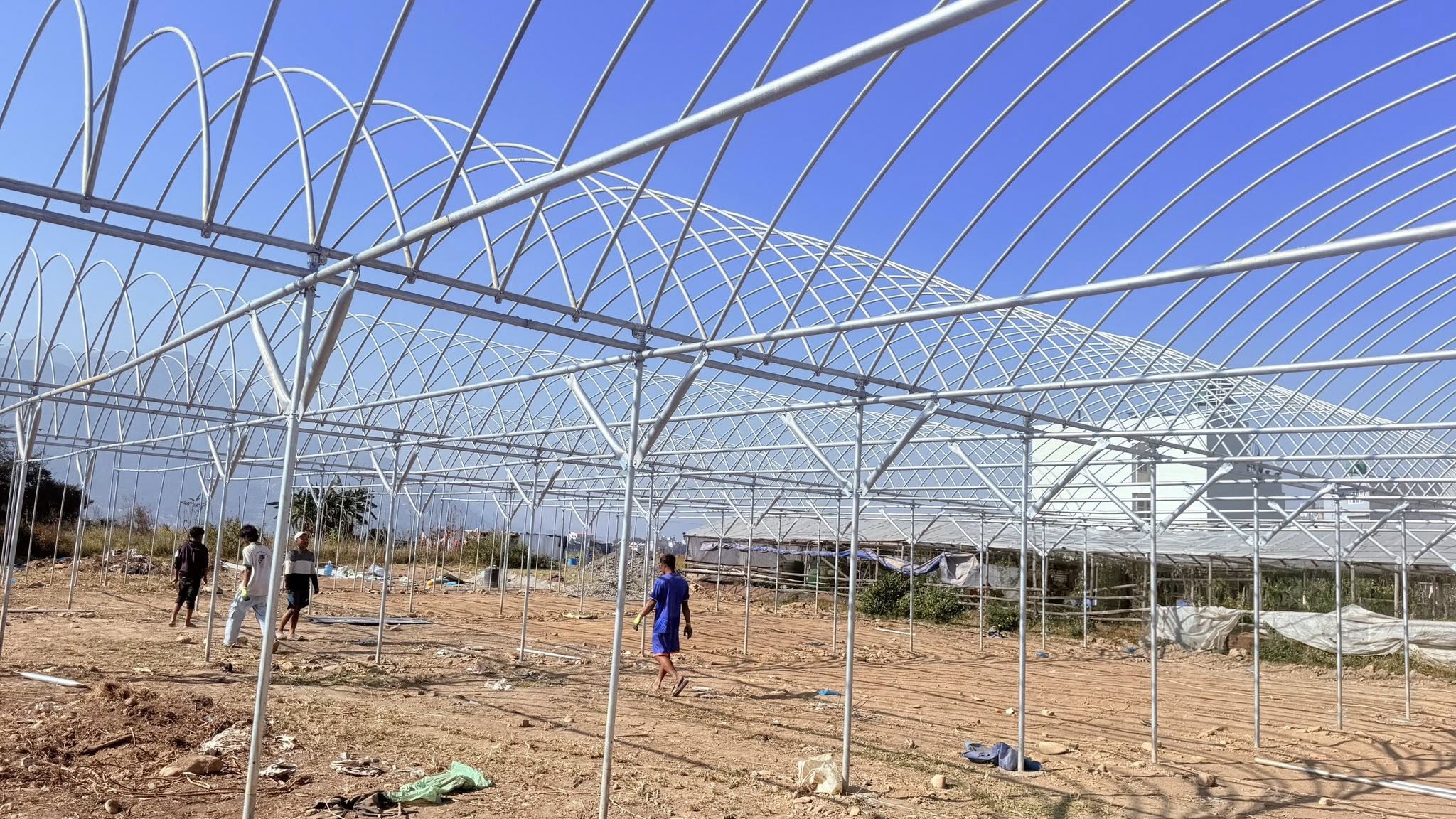
A Quonset-shaped GI pipe structure was selected as the primary framework. The design provided a spacious protected cultivation environment while allowing the different greenhouse systems to be integrated into a single structure.
The greenhouse included:
l GI pipe structural framework
l UV-protected plastic covering
l Insect netting
l Shade net
l Hail net
l Safety net
l Gutter sheet
l Water receiver sheet
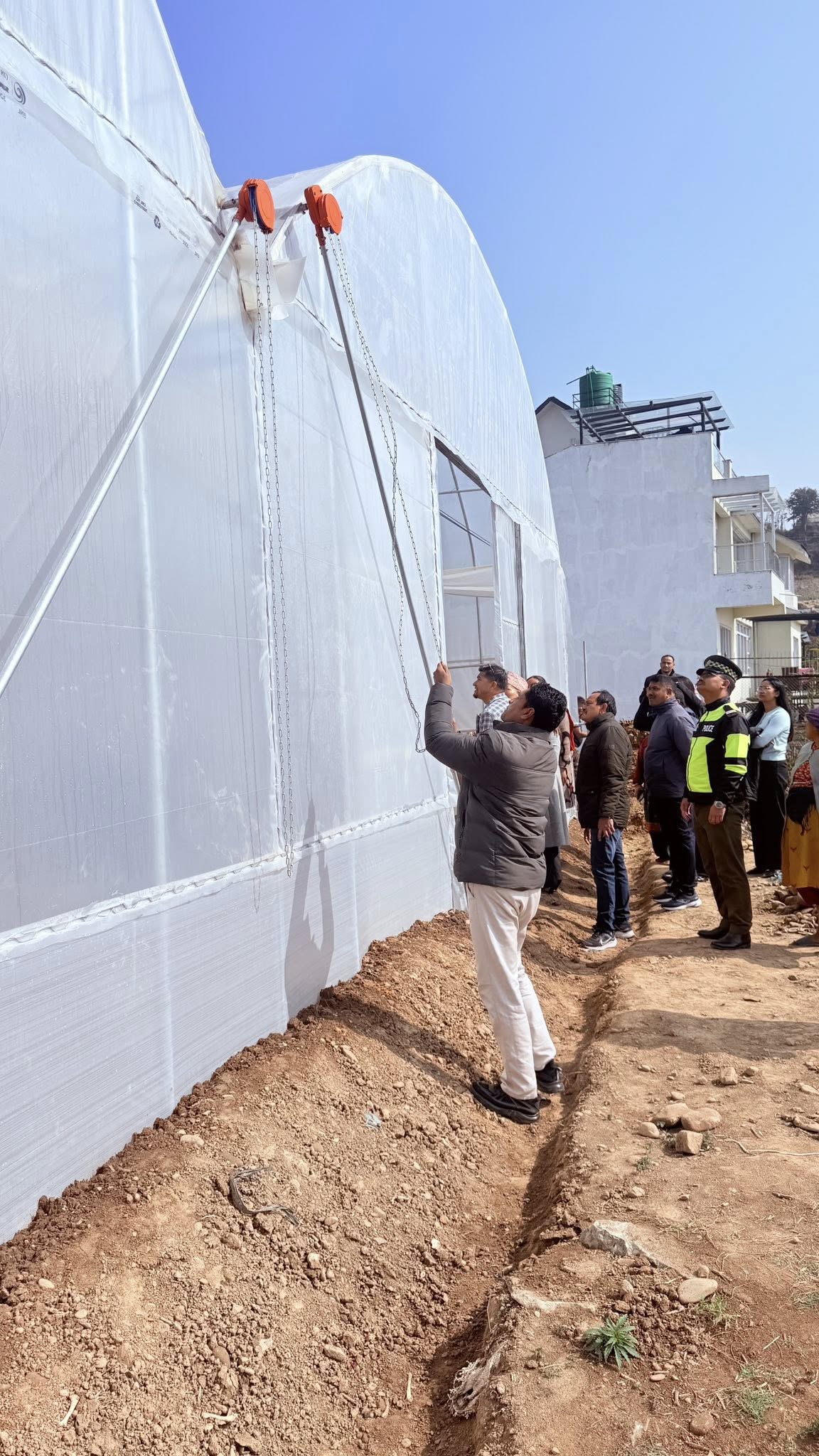
l Manual winch roll-up system
l Gear-operated roll-up system
l Drip irrigation system
l Fogger irrigation system
l Associated irrigation components and accessories
Rather than treating these components as separate installations, the systems were planned to work together as part of a complete protected cultivation structure.
A Design That Required Research Before Installation
One of the most challenging aspects of this project was that the greenhouse design was new to the Nepalese context.
Because of the scale and combination of systems involved, G Seven Agriculture had to conduct technical research and carefully study how the structural and operational components could be integrated before beginning installation.
The project therefore went beyond simply supplying standard greenhouse materials. It involved understanding the requirements of the structure, determining suitable installation methods, and adapting the design to practical conditions at the farm site.
This made the project an important learning experience for the G Seven team and demonstrated the importance of research and technical preparation when introducing new protected agriculture structures.
Integrated Irrigation for a Controlled Growing Environment
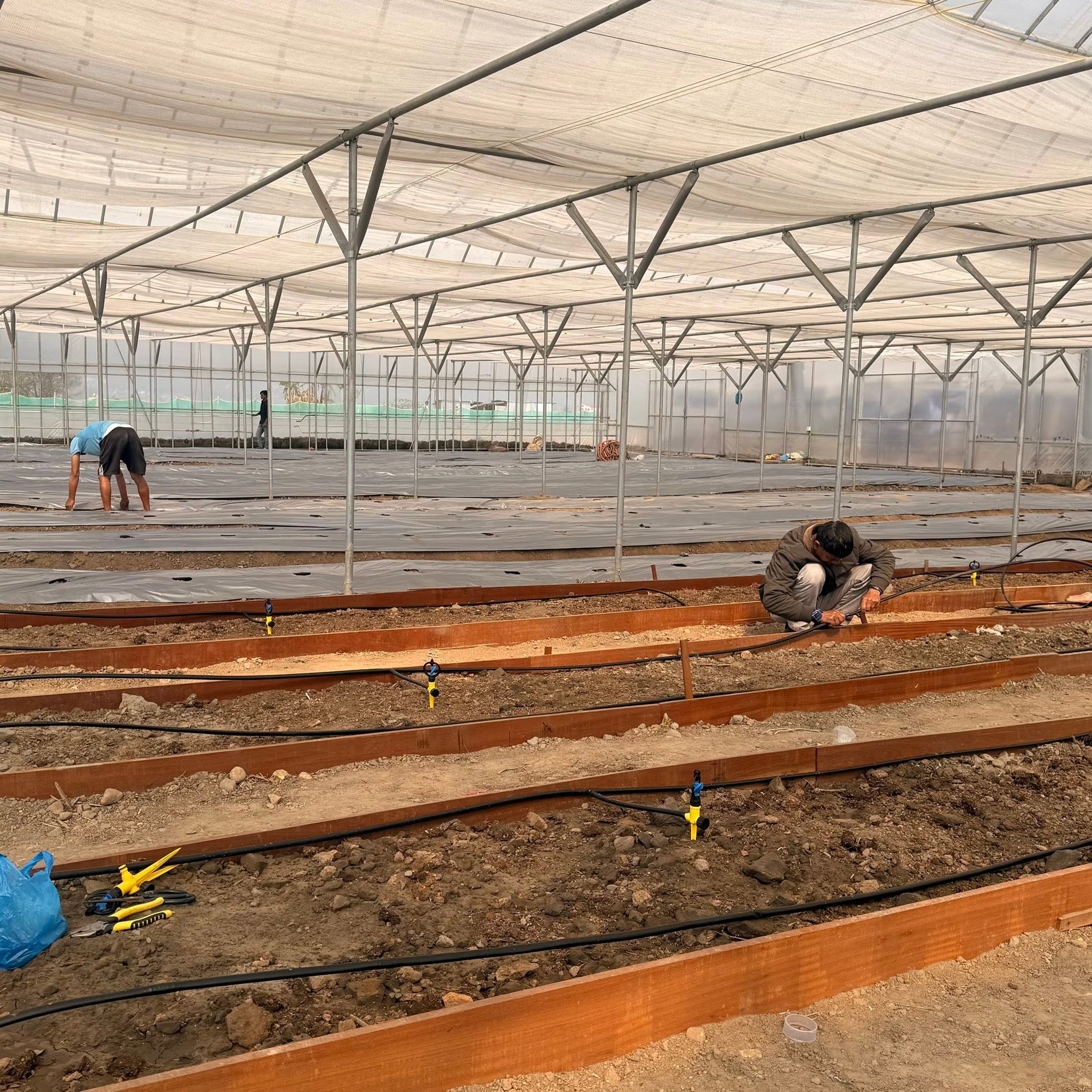
The greenhouse was equipped with both drip irrigation and fogger irrigation systems.
The drip irrigation system was incorporated to provide controlled water delivery to crops, helping improve water-use efficiency and maintain consistent irrigation.
The fogger system was installed as an additional component of the greenhouse environment, providing fine water droplets that can help manage the growing environment and support crop production under protected conditions.
The combination of structural protection and irrigation systems was intended to create a more controlled and manageable cultivation environment for the farm.
More Than Just a Greenhouse Structure
The project included several systems designed to improve the functionality and protection of the greenhouse.
The insect net helps reduce the entry of unwanted insects, while the shade net provides additional protection from excessive solar radiation when required. Hail netting and safety netting were also incorporated into the overall structure.
For ventilation and operational management, manual winch roll-up and gear-operated roll-up systems were included. These systems allow the greenhouse covering and ventilation openings to be managed according to operational requirements.
The addition of gutter sheets and water receiver sheets further complemented the structure by addressing rainwater and water-management requirements.
From Research to Installation
For G Seven Agriculture, this project was not simply another greenhouse installation.
Since the design was being introduced in a new form, the team had to approach the project with a combination of research, design understanding, material selection, fabrication, installation, and on-site problem solving.
Every component had to work with the overall greenhouse structure. The success of the project therefore depended on understanding how the structural frame, covering materials, ventilation systems, protective nets, and irrigation systems could be integrated into one functional unit.
G Seven Agriculture was responsible for the complete work, from the required technical preparation and material arrangement to the installation of the greenhouse and its associated systems.
Creating New Possibilities for Protected Agriculture in Nepal
The Sunakothi greenhouse project demonstrates how protected agriculture infrastructure can be adapted beyond conventional greenhouse designs.
With its 21 m × 32 m Quonset structure, integrated irrigation systems, multiple protective layers, and mechanical roll-up arrangements, the project provided an opportunity to introduce a different approach to greenhouse construction in Nepal.
More importantly, it gave the G Seven Agriculture team practical experience in researching and implementing a design that had not previously been applied in this form in Nepal.
Looking Beyond Conventional Greenhouse Projects
At G Seven Agriculture, every project provides an opportunity to learn, innovate, and develop better agricultural infrastructure.
The Sunakothi project was particularly meaningful because it required the team to move beyond familiar greenhouse models and work through the technical challenges of a new design.
From the initial research to the final installation, the project reflected G Seven Agriculture's commitment to bringing practical innovation into Nepal's agricultural sector.
The completed 21 m × 32 m Quonset greenhouse at Sunakothi now stands as an example of how international support, local agricultural needs, and technical expertise can come together to create new possibilities for protected cultivation in Nepal.
Project by G Seven Agriculture Pvt. Ltd. — Building better infrastructure for a more productive and resilient agricultural future.

.png)